Users no longer rely solely on referrals or local authorities; they search online and compare hospitals, clinics, and diagnostic centers, as well as their pricing and facilities, to get the best medical treatment for themselves and their loved ones.
User behavior has changed due to the digital shift, increasing competition, and rising patient acquisition costs for healthcare providers. To tackle such a shift, PPC for healthcare can be the ideal solution for medical brands seeking to capture the attention of high-intent patients online.
It helps boosts brand visibility, makes service promotion easier, and increases appointments and calls — ensuring every ad impression contributes to ROI.
If strategized the right way, PPC healthcare campaigns can be the most profitable and cost-effective advertising strategies for bringing consistent high-intent leads for the health and medical business.
We’ll explore more about PPC advertising for the healthcare industry in this post. We’ll help you craft compelling PPC ad creatives using high-converting ad formats to capture potential leads ready to consume your services.
Unlock PPC for Healthcare Advertising Growth with 7SearchPPC!
What Is PPC in Healthcare? Understanding the Concept & Its Role
PPC (Pay-Per-Click) is a digital advertising model used by several industries, including healthcare, to increase brand visibility, promote services and facilities, and ultimately boost appointments, calls, and clinic visits. In PPC advertising, healthcare providers pay only when users click their healthcare advertisements. It prevents advertisers from overspending and helps them stay within their PPC advertising budget.
What’s the Role of PPC for Healthcare?
Pay-per-click advertisements help increase the visibility of health and wellness brands among patients who are actively searching for medical treatment and services. These patients have high intent to convert, and PPC healthcare campaigns elevate the entire environment, easily converting them for the business.
Healthcare brands that create informative ads blending emotional storytelling—rather than sounding promotional (sales-oriented)—build trust and credibility, converting patients more effectively. It’s because personal health is a sensitive topic; patients look for brands that can provide reassurance and access to the best medical facilities to cure their illness.
Organic vs Paid: What’s Better for Healthcare Brands
SEO and content help drive organic traffic by securing top positions on search engine result pages, such as Google and Ask. The concern is that it takes time to achieve a top position in SERPs, and if you fail to appear among the 10 blue links, no one will ever know about your healthcare brand. Here, all your efforts will go in vain.
The key advantage of PPC marketing is that it puts your brand in front of users searching for immediate medical services, helping you convert more users quickly without waiting for months, making it a powerful tool for healthcare providers.
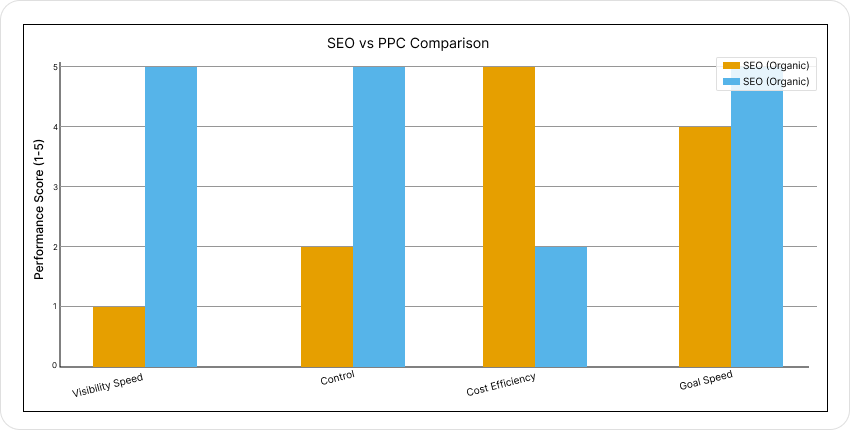
We use a simple 1–5 scoring model to represent the strengths of both channels.
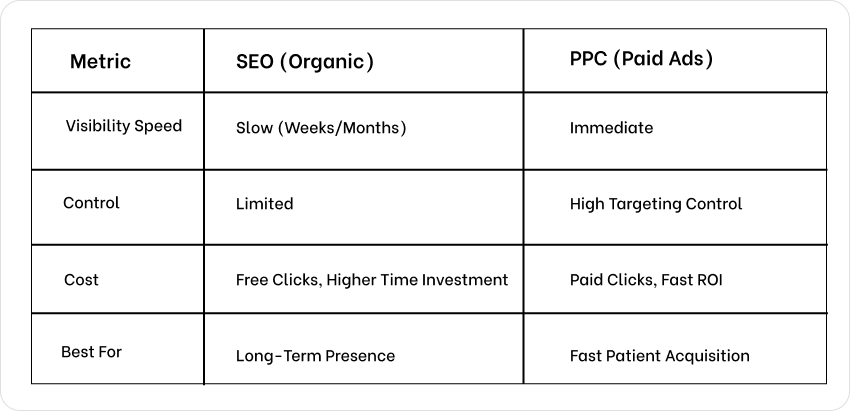
This doesn’t mean organic marketing is ineffective.
Health decisions are always risky. Through SEO and user-centric content, you can help patients make informed healthcare decisions. It creates long-term relationships, builds brand authority, and maintains positive interactions with users.
Medical brands should try to leverage both digital marketing strategies to meet their goals like no one else.
How is PPC for Healthcare Different from General PPC Advertising?
We’ve created this comparison table to help you better understand the difference between general and health-focused PPC advertising
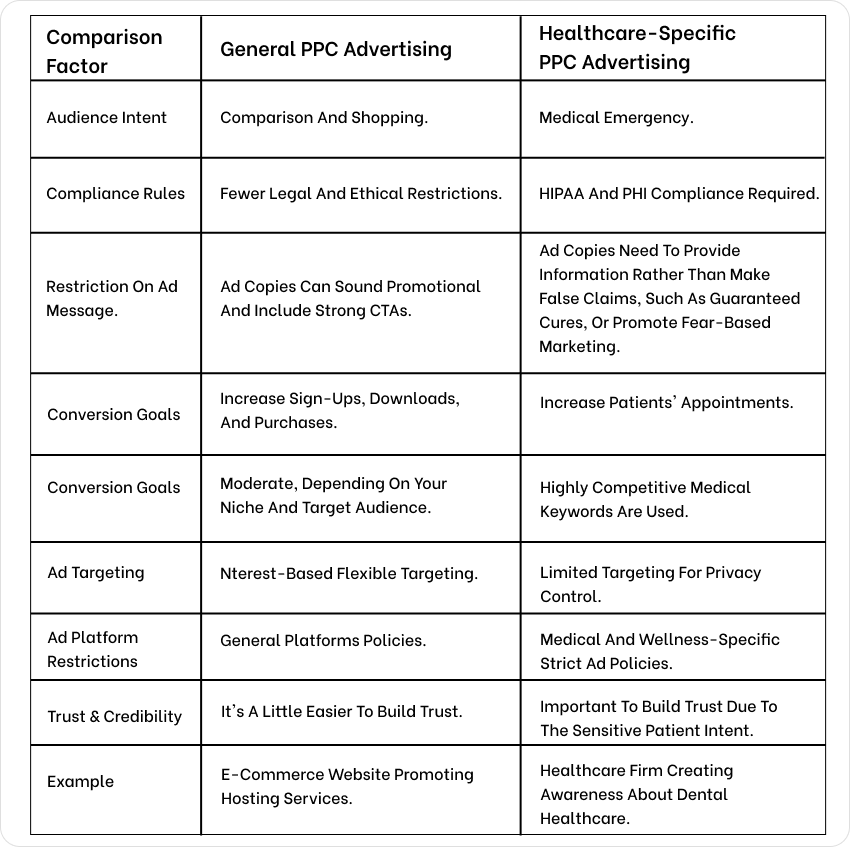
It’s important to understand the difference, as it helps craft powerful PPC healthcare campaigns and drive meaningful results.
Medicine Ads Guide: How Online Pharmaceutical Brands Attract, Convert & Retain Buyers
Why Healthcare Brands Should Invest in PPC Advertising
Unlike traditional advertising, PPC offers compelling benefits for healthcare providers: it helps acquire qualified patients, maximize ROI, and stand out in the competitive digital healthcare market. Breaking down the top 6 benefits of PPC for healthcare:
1. Reach Patients at the Right Moment
Patients thoroughly search online to make health decisions. PPC campaigns put your brand in front of your target audience when the conversion intent is the highest, helping you increase bookings and close more qualified patients.
2. Cost-Effective Marketing Strategy
Utilizing PPC for healthcare means advertisers have to pay only when users click their ads, and the best part is that they can optimize advertising costs based on the campaign performance. It helps them control their advertising costs and spend their budget more smartly.
3. Measurable Performance & Predictable ROI
PPC for healthcare platforms facilitates medical advertisers, with real-time analytic reports to track and measure PPC healthcare campaigns, to control ad spend, make relevant adjustments, and forecast per patient acquisition cost.
4. Faster Conversions Than SEO
SEO (Search Engine Optimization) strategies take longer to create, execute, and show results, whereas PPC campaigns are quick to set up, launch, and show quick results due to the immediate need for medical treatment.
5. Precise Ad Targeting
Healthcare providers can perform precise targeting based on their advertising goals and needs, including GEO, contextual, demographic, interest, device, ad format, and behavior. It helps reach the right audience at the right time, all within the ad budget.
6. Increases Brand Recall
Through medical PPC advertisements, you can place your brand multiple times in front of your audience via targeting high-intent keywords, making it easier for them to recognize your name and services. Ideal for competitive specialties such as dermatology, plastic surgery, orthopedic surgery, dentistry, and urgent care.
Along with these PPC benefits, healthcare providers can reach a global audience and retarget potential patients, making PPC for healthcare imperative and potent.
PPC Ad Formats That Work Best for Healthcare Businesses
Search, native, call-only, and banner ad formats all perform exceptionally well for healthcare businesses.
Search Ads
Search ads, also known as paid search advertising, appear when a user types specific keywords into the search bar to resolve their healthcare-related queries or have urgent medical needs. Search ads include text and a short description with a destination URL.
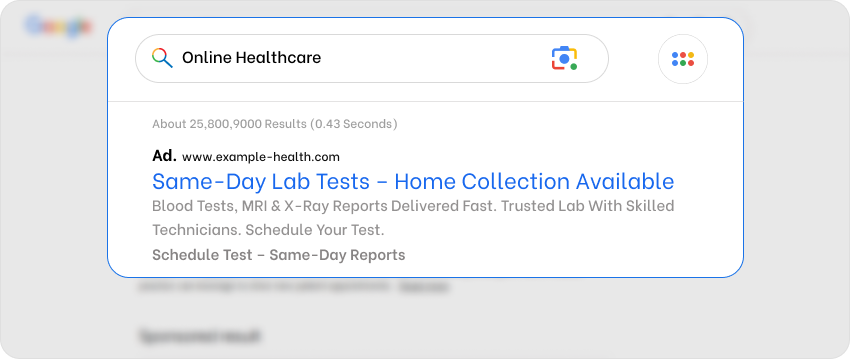
Tip: Your PPC ads’ intent and relevance should align with users’ intent to appear in SERPs successfully. CTAs you can create are “Visit Our [area_name] Clinic”, “Schedule Test – Same-Day Reports”, “Understand Prevention & Care Steps”, and “Get Wellness Tips”.
Why Use: It helps medical brands attract qualified patients, increase visibility, and drive higher ROI at a lower cost per click.
Call-only Ads
Call-only ads are mobile-focused ads designed to generate hospital appointments, provide emergency helpline numbers, and offer home care services. These ads initiate a business call when a user clicks them, helping patients make immediate contact with hospitals in emergencies. The call-through rate KPI measures the effectiveness of call-only ads.
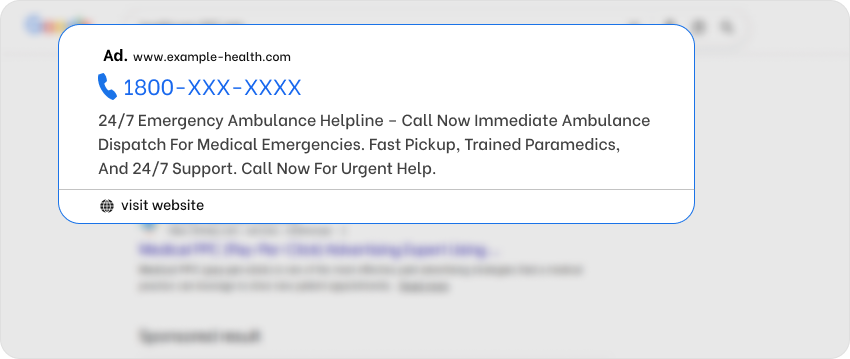
Tip: Use CTAs such as “Call Now for Quick Care,” “Talk to a Health Expert,” or “Immediate Support Available” to draw users’ attention immediately.
Why Use: This ad format not only helps you fill appointment gaps but also helps users looking for immediate contact information. Making it ideal for ambulance services, surgery centers, and mental health hotlines.
Banner Ads
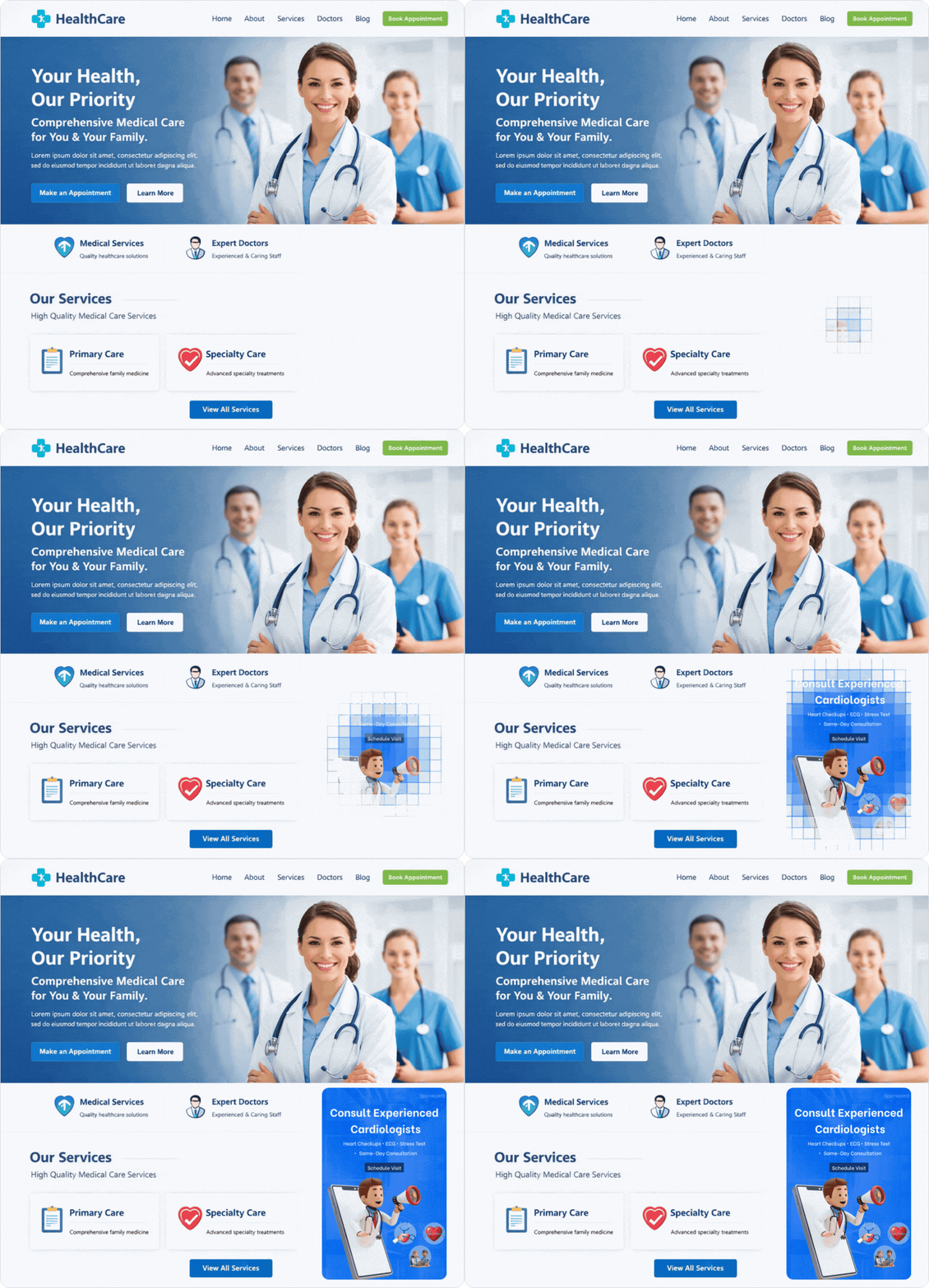
Banner ads are visually appealing ads that appear on websites or in apps to promote medical services, hospitals, treatments, or patient programs.
Read the post to learn more about banner ads: Banner Ads: What They Are and How They Work
Tip: In your banner ads, use brand colors, font style, and appealing visuals to capture users’ attention.
Why Use: Banner ads are one of the most widely used display ad formats, popular across industries for driving targeted traffic and ROI.
Native Ads

Native ads blend seamlessly with the website content and design, making them look non-intrusive across platforms. Healthcare brands can promote health services, treatments, health checkup programs, and their doctors’ expertise. Native ads are titled as “Sponsored” or “Promoted.”
Tip: Provide trustworthy, reliable information via your native ads to lower your CPC.
Why Use: Native ads help build trust and credibility by providing educational content and addressing patients’ general queries, rather than coming across as a promotional healthcare business.
Use multiple ad formats and promote them across platforms to increase their reach and visibility. Include real doctors ’ and hospitals’ pictures, create HIPAA-compliant ad messages with smooth graphics and animation, and redirect users to a dedicated landing page with a compelling CTA.
❌ Don’t redirect users to any random page, and ensure the ad and the landing page content align with each other to maintain trust and reduce bounce rate.
How to Craft High-Converting PPC Ads for Healthcare
Outline target audience demographics, behavior, and interests to craft patient-oriented ad messages that incorporate emotional storytelling and trust-building elements, with precise targeting to make your healthcare PPC advertising strategy more effective and converting.
1. Outline Your Patients
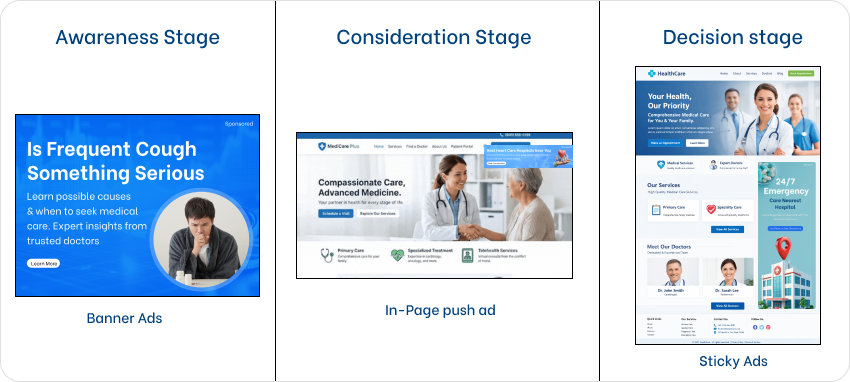
To create effective PPC ads for healthcare, you first need to understand who your audience is, what they need, and which funnel they fall into — this will help you grasp key details such as language preferences, geographic location, and search intent. This way, you can create the most effective PPC campaigns for each funnel, stay aligned with different search intents, offer services and facilities accordingly, and communicate with patients in their local language.
Advice: Don’t randomly choose any keyword; always start by understanding your users’ personas, not by preparing keyword sheets for healthcare PPC ads.
2. Create Patient-Centric PPC Ads
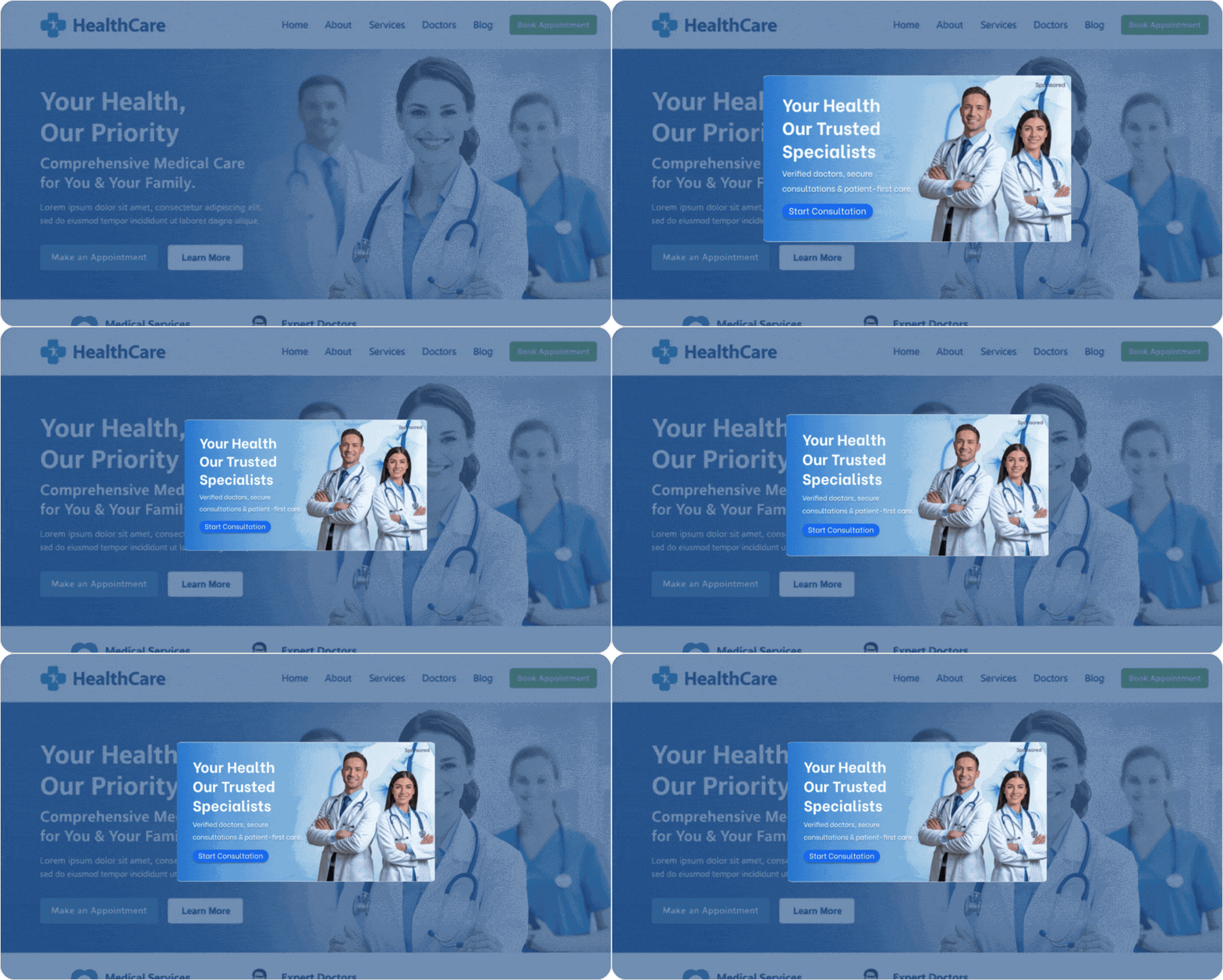
In your PPC ad copies, address your patients’ pain points directly instead of constantly bragging about your healthcare brand. Patients want to treat their conditions with the help of a trusted doctor. Healthcare brands that focus on patients’ needs rather than generic messages connect better with those seeking medical help and achieve higher click-through rates.
3. Add Strong Trust Signals
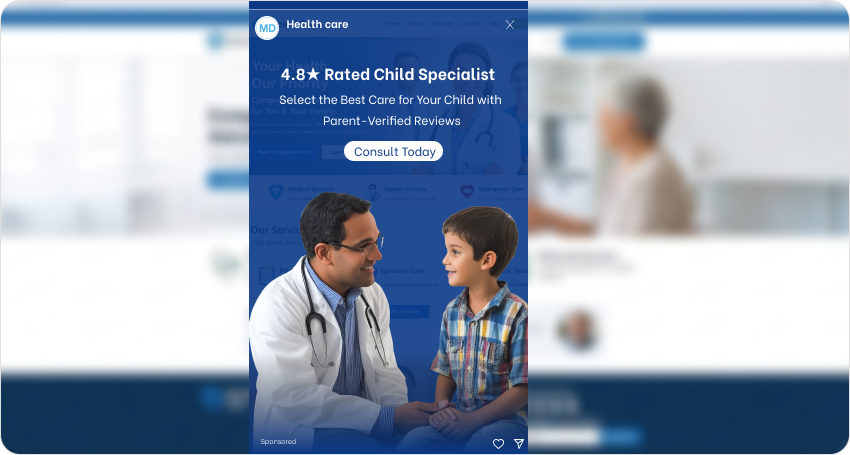
Personal health is a sensitive topic, and patients need reassurance before choosing any doctor, hospital, clinic, pharmacy, or diagnostic center for their medical needs. Healthcare brands can include trust elements such as awards, certificates, patient testimonials, and faculty profiles in their PPC ads to demonstrate expertise and success rates and motivate patients to take relevant actions.
4. Add Emotions in Your PPC Advertisements
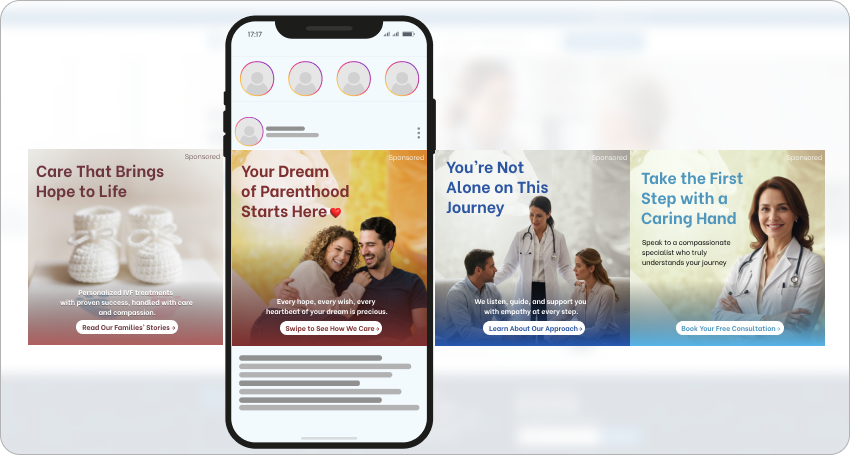
Patients often become emotional about their medical conditions —sometimes they break down, experience fear, or are overwhelmed by questions. In these moments, they want to express their emotions, fears, and confusion, and seek a trustworthy doctor-cum-friend they can rely on.
For instance, issues related to skin, PCOS, and fertility are very sensitive, and patients need someone who can give them adequate time and appropriate medical guidance.
Advice: Use storytelling and emotions in your ad messages.
5. Perform GEO-Targeting to Reach Potential Patients
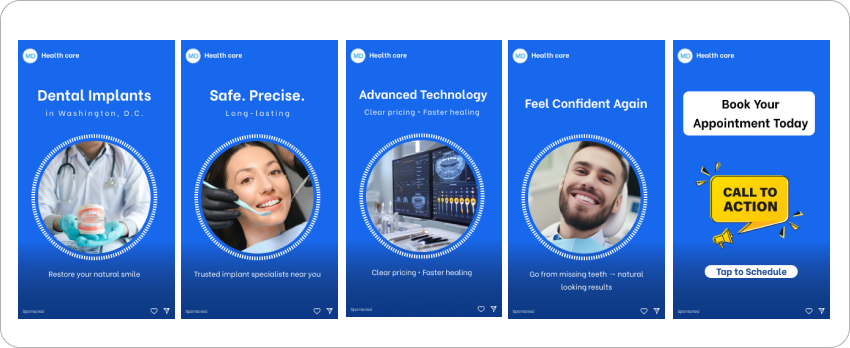
Use geo-targeting to reach patients in specific countries, cities, or local areas relevant to your healthcare business. Including location details in ad messages lowers CPC, boosts click-through rates, and enhances conversion rates. It’s especially effective for local healthcare providers to capture local search intent.
Advice: Pick local and regional keywords with moderate search volume.
6. Create Strong and Click-Worthy CTAs
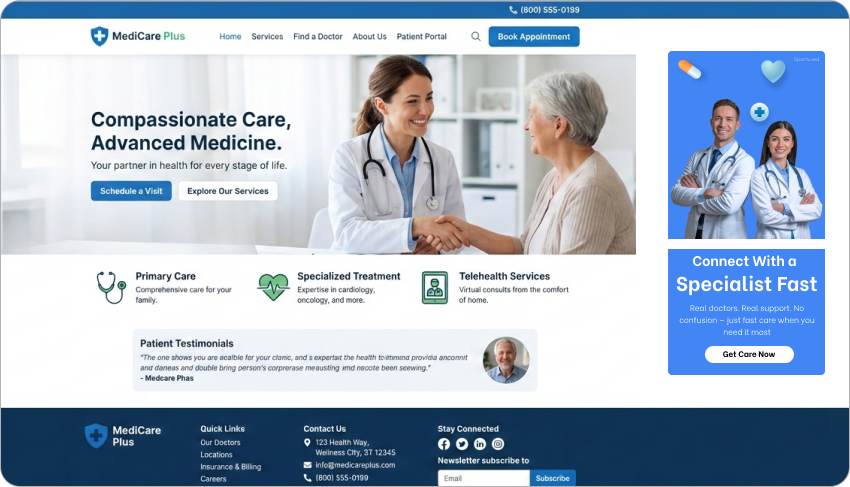
Generic CTAs like (get now, try now, learn more, click here, submit details) are too limited and don’t draw the attention of patients who need immediate medical care. Patients want quick and clear CTAs that direct them toward the next steps, especially when they’re in pain or require urgent medical attention.
Advice: Start with action words (start, begin, get, book), emphasize your ad message’s benefit, keep it visually appealing and concise, and place it where it captures immediate attention to prevent lead drop-offs.
To make your healthcare PPC ad strategy more effective, use the following ad optimization tips to lower patient acquisition costs and maximize your campaign’s results.
- Create 3-5 ad creatives to perform A/B testing.
- Protect patients’ sensitive information in your retargeting ads
- Keep your ad messages short, simple, and concise
- Ensure your landing pages and ads are mobile-optimized.Schedule ads to reach users at the peak time of medical events and programs.
- Use ad platforms that can provide real-time analytical reports.
- Use niche-specific keywords to avoid irrelevant traffic and stay within your PPC healthcare budget.
- Add only a few fields to your lead form.
Highlight your areas of expertise without sounding overly promotional in your PPC advertisements, and be more cautious and attentive when advertising sensitive medical treatments. These practices help you create the best PPC healthcare campaigns for your brand.
Also Read: Steps to Advertise a Health and Pharmacy Site to Increase Sales
How to Choose High-Intent Healthcare Keywords for PPC Campaigns
To choose top-performing keywords, start by outlining the services, treatments, and programs you want to offer, then identify your ideal audience and the consumer funnel, and research and practice keywords to drive more targeted traffic and qualified patients.
Remember, not every user is looking to book appointments, schedule calls, or submit forms. Different users have different search intent: some seek information, others compare options, while some aim to take immediate action. Thus, targeting health and medical-related keywords based on the consumer funnel is a wise choice for healthcare providers.
1. Awareness Stage – Seek Information
Users are searching for symptoms, treatments, causes, and general health concerns, such as what could be causing the condition they’re experiencing, what it’s called, quick remedies, whether it’s curable at home, or requires serious medical attention from skilled practitioners.
Users are seeking information rather than medical faculty or hospitals, so pick keywords for your ads that have information-focused intent, as they help build visibility, educate users, position you as a trusted resource, and increase brand recall.
Keywords to target
- Causes of knee pain
- Symptoms of thyroid disorder
- How to treat back pain at home
These keywords have informational intent and can help healthcare brands attract users in the awareness phase.
2. Consideration Stage – Compare Medical Services and Facilities
Users have successfully given a name to what they’re experiencing. They are now ready to compare different doctors, hospitals, clinics, and treatment options to choose the best medical solution for themselves or their loved ones. These users have strong medical intent and are ready to research thoroughly to refine their list of top healthcare providers.
They check patients’ reviews, treatment success rates, look for specialists, and explore nearby facilities. Here, hospitals, clinics, and medical journal sites can leverage high-intent targeted keywords.
Keywords to target
- Orthopedic specialist near me
- Top cardiology hospitals in Mumbai
- Best IVF clinic reviews
- ACL surgery success rate
Targeted keywords and helpful ad copy help patients compare the best healthcare brands for their medical condition.
3. Decision Stage – Ready to Book Medical Services
Users have successfully chosen the solution they want to opt for their medical illness. Users search with the intent of booking appointments, making calls, or filling out forms to visit the hospital premises. Branded and value-driven keywords help drive qualified patients and increase ROI.
Keywords to target
- Book a gynecologist appointment
- 24/7 emergency hospital near me
- [healthcare brand name] helpline number
4. Retention Stage – Looking for Post Care Treatment
Patients look for follow-ups, rehabilitation, or continued consultations to prevent medical issues after treatment. This helps healthcare providers maintain ongoing patient relationships and increase patients’ lifetime value. Target post-care related keywords to position your health brand.
Keywords to target
- Physiotherapy after joint replacement
- Cancer follow-up clinic
- Post-surgery diet consultation
- Cardiac rehab program near me
To research keywords for your health niche and make your message reach your patients, you can use keyword research tools like Semrush, Moz, and Ahrefs. These powerful tools provide search volume, keyword difficulty, CPC, related keywords, search intent, competition level, and volume trend, making it easier to choose the right keywords to align with each funnel and drive desired traffic.
Target long-tail keywords, as these are specific phrases used to answer more precise queries and have lower-to-moderate search volume with high conversion intent. To make your keyword strategy for PPC healthcare campaigns more prominent, use the following tips:
- Identify the keywords your competitors use in their PPC campaigns to reduce the keyword gap.
- Prepare regional and seasonal keywords such as “walk-in clinic near me” and “Covid-19 prevention measures” to stay aligned with what patients are searching for online.
- Avoid keywords that don’t match your health and medical niche.
- Always use a combination of keyword research tools to get top-performing keywords for your healthcare PPC campaigns.
- Sensitive keywords should be used with caution.
- Utilizing the right SEO keywords reduces ad spend, reaches the intended audience, and maximizes PPC advertising profits.
What are the Best PPC Ad Platforms for Health and Medical Advertising
Specialized healthcare advertising networks make it easier to create, launch, track, and optimize HIPAA-compliant campaigns to reach potential patients. High-converting ad networks for PPC healthcare advertising include Google Ads, Meta Ads, Bing Ads, and 7SearchPPC. These platforms enhance reach with precise targeting and are better alternatives to traditional advertising methods.
Google Ads
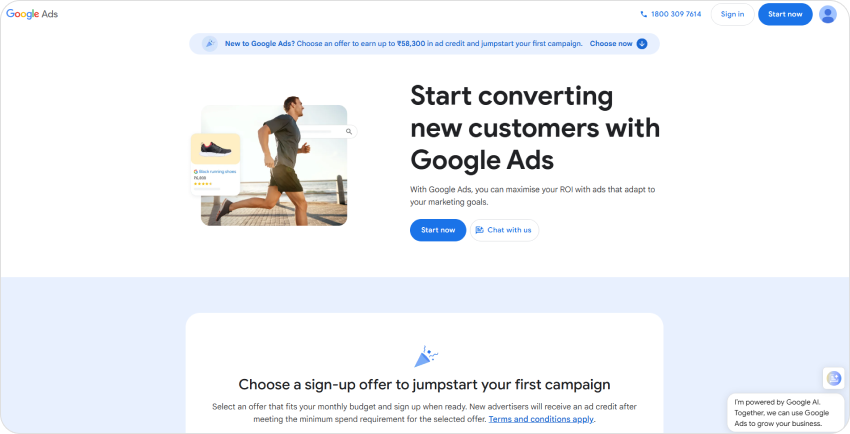
Use Google’s AI-powered ad solutions to reach local and global patients looking for medical services to grow your healthcare business. Google offers Search, Display, Shopping, Video, App, and Performance Max functionalities to meet your healthcare advertising goals. Whether you want to drive qualified patients, increase awareness of your services, or retain patients, you can easily do so with the platform.
Despite its powerful features, advertising healthcare-related content requires legitimate medical certification, compliance with local and regional laws and regulations, and adherence to Google’s healthcare and medicine ad guidelines.
Sensitive keywords like “cancer treatment,” “rehab,” or “mental health” require caution, and promoting certain categories is strictly prohibited on the platform, such as marketing of unauthorized pharmacies and prescribing opioid painkillers, to preserve users’ experience and trust.
If Google finds out you’re violating any of their medical ad policies, your account can get suspended, and it can’t be revived unless you successfully appeal. So, you need to be careful when advertising on Google Ads.
Healthcare providers can communicate with the ad expert managers to get personalized support to resolve their issues and learn how to start or enhance their healthcare PPC campaigns.
Meta Ads
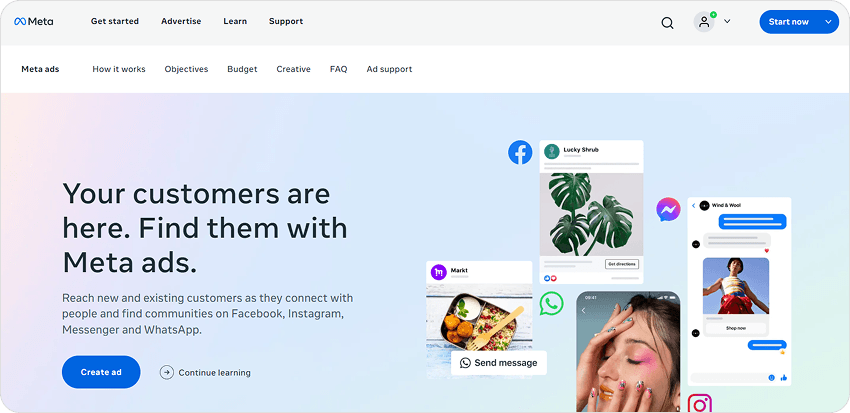
Meta ads let you connect and reconnect with your potential leads where they spend most of their time: social media.
50% of US social media users follow some type of HCP (Healthcare Professional), company, or healthcare influencer for medical advice or treatment procedures. 80% of users use social media to get healthcare information.
Meta Ads help build interactions on the most-used social media channels, including Facebook, Messenger, Instagram, and WhatsApp. Healthcare providers can create and launch PPC healthcare campaigns from a single platform to boost their visibility across these social platforms.
Meta offers advanced marketing tools and ad solutions to help build real connections with users who are constantly seeking healthcare advice and solutions. Its automated targeting and AI-driven tools generate personalized ads to help you reach your segmented audience.
Healthcare providers can use the app to track and make changes on the go on their handheld devices. You need a Facebook business page and must adhere to Meta’s health and wellness advertising policies to successfully launch PPC campaigns on the platform.
Bing Ads
Advertise on Bing Ads to target Microsoft platforms, including Bing Search, MSN, and LinkedIn, to reach the older demographic seeking healthcare information, such as dental care, physiotherapy, or diagnostic tests.
Bing’s user base is heavily male-dominated, with 64% male and 36% female. So, if you want to target an older, mainly male demographic, then Bing Ads is an ideal choice for your healthcare business.
Bing Ads offer lower competition than Google, often resulting in better cost-per-click and strong patient acquisition. The platform also offers training and certificates to help beginner advertisers.
Microsoft’s advertising agency offers free consultation and ad support services to help healthcare providers create HIPAA- and PHI-compliant ad creatives while maintaining the sensitivity of the healthcare niche. It helps you engage with your potential patients at every marketing touchpoint.
7SearchPPC
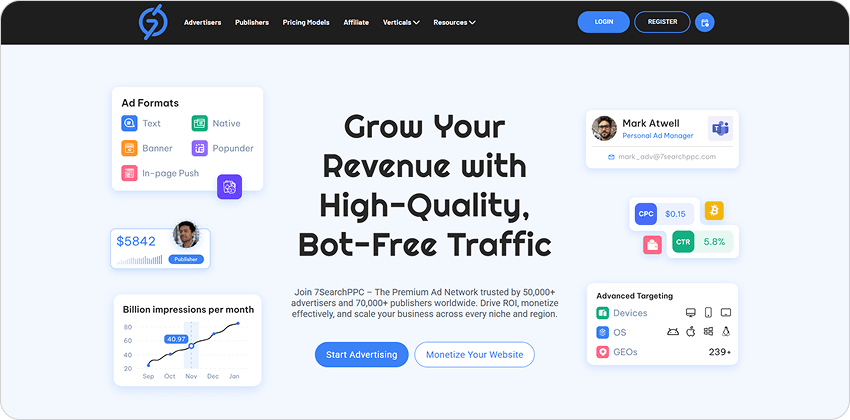
A HIPAA-compliant, cost-effective alternative to Google, Meta, and Bing is 7SearchPPC. It’s a self-serve, one-stop solution for online healthcare and pharmacy businesses of all sizes, offering the most-consumed digital ad formats, including text, native, banner, pop-under, and in-page push. Healthcare providers, pharmacies, medical equipment suppliers, wellness & preventive care centers, or healthcare apps – anyone can use the platform to maximize their business reach, visibility, and ROI globally.
Its beginner-friendly user interface makes it easier to create and launch healthcare ad campaigns, and real-time reporting enables data-driven decisions to optimize ads and improve campaign performance. 7SearchPPC uses anti-fraud technology to ensure you always receive genuine clicks and traffic to keep your PPC health ads at a lower CPC. It offers fewer restrictions and regulations compared to other healthcare ad networks and facilitates the listed benefits:
- 24/7 expert ad manager support
- Full transparency and data control
- Campaign approvals within 24 hours
- CPC and CPM pricing models
- Real-time conversion tracking via Postback URL
- Healthcare campaign scheduling
- Precise targeting based on device, OS, and geo
Maximize your Healthcare and Web Pharmacy ROI with 7SearchPPC!
7SearchPPC offers specialized healthcare advertising solutions and has successfully helped healthcare industries achieve their business goals. Use the Case Study to explore more!
Create a multi-channel PPC advertising strategy and use a combination of ad platforms to maximize your campaign’s reach and profit.
How to Measure Performance of Healthcare PPC Campaigns
To measure the effectiveness of PPC healthcare campaigns, healthcare providers need to select the KPIs (key performance indicators) that align with their business goals. CTR, CPC, QA, CR, and ROI are among the most popular KPIs that we’ll discuss here.
- Click-Through Rate (CTR): CTR is a digital advertising metric that measures the percentage of users who clicked on your PPC health ads compared to those who saw them. A high CTR indicates strong ad relevance and engagement.
- Cost-Per-Click (CPC): CPC is the amount you pay for each click generated by your PPC campaign. Strive to lower your CPC to meet your advertising goals, as it reflects more efficient ad spend.
- Cost Per Lead (CPL): CPL, also known as cost per acquisition, is the expense of obtaining potential patients’ personal information through a lead form or a call, divided by the total advertising cost. A low CPL signifies better ROI and more efficient PPC health campaigns.
- Conversion Rates (CR): CR is the number of users who have completed the desired action, such as filling out a form, scheduling an appointment, or visiting a hospital, divided by the number of clicks the PPC advertisement receives.
- Return on Investment (ROI): ROI is the total income generated by PPC ads relative to the total investment made in health advertising. Personalized ad copies with appealing visuals and precise targeting help generate more ROI.
- Appointment Conversion Rate (ACR): ACR represents the total number of leads from your PPC health campaign that are successfully converted for your healthcare brands. A high ACR signifies the acquisition of quality leads who genuinely need your healthcare services and facilities.
- Call Tracking: The call-tracking KPI measures the number of calls generated by PPC health campaigns and assesses their value to the business. In call tracking, advertisers examine call duration, user intent, user queries, and the call-to-consultation rate, which is the number of actual appointments.
- Quality Score: Quality score is used to assess PPC campaigns’ accuracy, compliance, brand consistency, and relevance. A higher quality score indicates greater visibility, better-served intent, and a lower CPC.
Improving this metric leads to more qualified inquiries, bookings, in-person visits, and patient retention.
Common Challenges in PPC for Healthcare & How to Overcome Them
These are some common challenges that health and wellness brands experience while advertising their supplements, treatments, services, and health-related content.
Rigid Advertising Policies & Compliance Issues
Advertising platforms thoroughly regulate health and wellness content to protect patients’ personal information, prevent misleading claims, and ensure a safe digital healthcare environment.
You can’t collect patients’ information without taking proper data security measures, and failing to do so or violating compliance laws can result in your PPC healthcare ads being disapproved or your advertiser account being permanently frozen.
How to overcome:
- Create PPC health and wellness ad copies that are fully HIPAA- and PHI-compliant and strictly follow the advertising platform’s healthcare and medical policies.
- Use a secure website with an SSL certificate and collect only essential patient information to build trust and ensure data privacy.
- Avoid making false or misleading claims, such as guaranteeing pain relief, and never promote treatments or services without holding valid medical licenses or certifications.
Promoting Healthcare Content Is Highly Competitive, and CPC Is Expensive
PPC advertising in the healthcare industry is extremely competitive. Hospitals, clinics, and specialists aggressively bid on high-intent keywords—especially those related to treatments, specialties, and location-based searches such as
“best cardiologist,” “dental clinic near me,” or “urgent care near me.”
This intense competition significantly increases the cost-per-click (CPC), making healthcare PPC campaigns harder to manage within limited budgets.
How to Overcome:
- Focus on long-tail keywords instead of broad, expensive terms, such as
“orthopedic doctor near me for knee pain” or
“pediatric dentist Saturday appointment,”
to attract more qualified leads at a lower CPC. - Increase bids for high-intent geographic locations and mobile devices, as smartphone users are more likely to call or book appointments.
Trust Deficit Among First-Time Patients
Patients prefer healthcare providers who appear trustworthy, credible, and transparent.
When PPC ads or landing pages lack proof—such as doctor profiles, certifications, hospital accreditations, or authentic patient reviews—users hesitate and often leave without taking action.
How to Overcome:
- Highlight doctor credentials, medical licenses, certifications, awards, and real patient testimonials to build confidence in your healthcare services.
- Maintain brand consistency across ads and landing pages by aligning visuals, messaging, CTAs, and tone to reduce confusion and bounce rates.
Restrictions on Audience Targeting
Healthcare advertising platforms enforce strict medical policies that limit or prohibit targeting users based on sensitive health conditions, medical history, or restricted regions.
These rules make it difficult for healthcare brands to reach high-intent audiences at a lower CPC.
How to Overcome:
- Use intent-based keyword targeting to reach users actively searching for medical services, such as
“dermatologist for acne treatment near me.”
Plan and strategize PPC healthcare ad campaigns smartly to overcome these challenges.
The Future of Healthcare Advertising is PPC-Driven
PPC for healthcare is a powerful tool for the healthcare industry. It helps build emotional connections, increase brand awareness, and drive immediate user actions. To create high-converting PPC campaigns for healthcare, develop ad strategies tailored to your healthcare niche, audience, and services. We’ve listed the best tools and ad examples to help you craft the best PPC campaigns and maximize your ad profits.
PPC for Healthcare Related Articles:
- Best Weight Loss Ads Creatives to Boost Your PPC Campaigns
- Top Ways to Generate Quality Health Insurance Leads with Ads
- Top Health Insurance Advertising Ideas to Hook the Audience
Frequently Asked Questions
How to target high-intent patients with pay-per-click ads?
Ans. Use high-intent, action-focused keywords such as 24×7 ambulance, best IVF treatment, pharmacy near me, and LASIK surgery price, along with geographic targeting, to reach specific countries, cities, and local areas to attract high-intent healthcare leads.
What are the benefits of PPC advertising for healthcare?
Ans. PPC for healthcare helps increase visibility, enable precise targeting, build credibility, and boost ROI by promoting health and wellness services and facilities in a user-centric way, attracting qualified patients for practitioners, hospitals, and clinics.
Who can practice PPC advertising in healthcare?
Ans. PPC advertising can be conducted by individual practitioners (doctors, dentists, therapists), clinics, hospitals, pharmaceutical companies, consultation platforms, medical journal websites, and individuals with proper medical licenses who can ensure HIPAA-compliant advertising.
What are the best self-serve pay-per-click advertising networks for healthcare?
Ans. Google Ads, Meta Ads, Bing Ads, and 7SearchPPC are the best self-serve pay-per-click advertising networks for healthcare.
I just recently opened a dental practice. How can I generate leads for the clinic?
Ans. Use the PPC advertising model to create awareness, capture patients’ attention, and drive conversions for your newly opened dental clinic.