
Key Takeaways!
- FTD Tracking helps you identify users who’re more likely to become your loyal customers. It also helps eliminate low-quality traffic.
- Optimize and scale ad campaigns based on conversion-focused metrics.
- The first-time deposit metric isn’t suitable for eCommerce, SaaS, or blogging businesses.
- A high first-time deposit rate indicates you’re attracting more targeted traffic and users are showing trust in your products, services, and offers.
High impression and click-through rates do look impressive on the dashboard, but they don’t show how much of the intended traffic you’re actually generating and converting. They are the vanity metrics that can’t be used to measure, track, optimize, or scale online ad campaigns.
You need to track revenue-focused key performance indicators, such as FTDs, to measure how many registered users you’re converting through your campaigns and forecast the revenue you can generate.
FTD tracking in iGaming, crypto, and other deposit-driven business models is an important metric. It not only helps them better track their first-time depositor conversion rate but also allows advertisers to make more precise advertising decisions.
In this blog, we’ll explain what FTD tracking means, why it’s important for advertisers, and how it works.
What is First-Time Deposit Tracking?
FTD Tracking is a method used in digital advertising, especially in industries like iGaming, fintech, etc., to monitor when a user makes their very first deposit on a platform.
How to Calculate FTD Rate?
The first-time deposit is calculated by dividing the total number of first-time deposits by the total number of platform registrations generated within a specified time period, to accurately track ad campaign performance.

Example: 125 online gamers registered on an iGaming platform, of which 35 successfully made their first deposit. Therefore, the FTD rate would be 28%.
Tracking FTD enables you to analyze:
- Is there any fluctuation between the registration rate and the first-time depositor rate?
- How many active registrations are converting into customers?
- Which channels, GEOs, ad campaigns, and offers are attracting more first-time depositors?
For instance, if your sign-up rate is higher but your FTD rate is much lower, it means your website lacks trust-building elements, offers aren’t lucrative, and your online presence lacks credibility. It’ll help you make the required changes, so you can convert more sign-up users and maximize your revenue.
What Businesses Can Track First-Time Deposits?
The first-time deposit KPI can be tracked by deposit-driven business models or affiliates operating in cryptocurrencies, iGaming, finance, and other industries where users can deposit money to play, buy, or trade.
Tracking the FTD metric isn’t relevant for eCommerce, blogging, or SaaS, as these business models don’t require users to make deposits and primarily focus on metrics such as signups, purchases, and subscriptions.
➡️ FTD tracking isn’t restricted to a particular niche; instead, it varies by business model.
➡️ Measure FTD rates weekly, bi-weekly, or monthly, and compare them with previous reports to see if your first-time deposit rate is improving.
How to Use Postback Tracking for Smarter Ad Performance with 7SearchPPC
Why is FTD Tracking Important for Advertisers?
The online conversion-tracking metric FTD is a vital KPI for marketers and affiliates, as it helps them make more accurate advertising decisions and boost ROI.
It helps to:
- Filter out first-time depositors and maintain engagement with them through both organic and paid content.
- Exclude users who have only registered and didn’t choose to make a deposit, even after retargeting.
- Increase the budget for the top-performing channels, campaigns, and regions that generated more first-time paying customers.
- Identify customers who are more likely to re-deposit and become loyal to your brand.
- Identify products, services, or offers that are driving more first-time deposits.
In short:
- Increases customer lifetime value.
- Eliminates low-quality traffic.
- Maximizes revenue.
- Optimize the right variable.

FTD Tracking Vs Conversion Attribution Tracking: What’s the Difference?
FTD tracking and conversion attribution tracking can’t be used interchangeably, as they serve different purposes and have distinct functionalities.
| Parameter | FTD Tracking | Conversion Attribution Tracking |
|---|---|---|
| What does it measure? | FTD tracking measures only a specific conversion event: the first-time depositor rate. | Conversion attribution tracking identifies the touchpoints that drive the conversion. |
| What is its purpose? | Identify active first-time paying customers. | Assign attribution (credit) to the contributing touchpoints. |
| Which business model can use it? | Used only by deposit-based business models. | Used by all business models. |
| Example | Measure how many signup users convert into first-time depositors. | Analyze traffic source, ad campaign, offer, and landing page that contributed to the conversion. |
➡️Use both for enhanced tracking and optimization.
How to Track FTD?
Users must set the postback URL and connect to a tracking tool that offers seamless online first-time deposit tracking.
#Set Postback URL.
- Pick a reliable FTD Tracker.
- Connect your traffic source to the tracking tool.
- Select the “Click_ID” parameter while creating the ad campaign.
- Copy and paste the postback URL in the tracking tool.
#Track FTD using the Postback URL.
- Whenever a user interacts with and clicks the ad, a Click_ID is assigned to them.
- It is stored in the backend when a user registers and is activated only when they complete the conversion.
- The advertiser server sends conversion data, including Event Type, amount, and Click_ID, to the tracking platform.
- The tracker assigns attribution.
- Now, you can filter out all the first-time depositors to analyze how many users converted into customers.
Also Read – Tips for Affiliates to Stay Profitable in 2026 Amid Global Uncertainty
What Are the Popular Tools for FTD Tracking?
Using an online tracking tool, you can easily track FTD conversions and manage campaigns based on insights. It makes the ad campaign tracking process hassle-free. Some of the tools are listed below.
BeMob
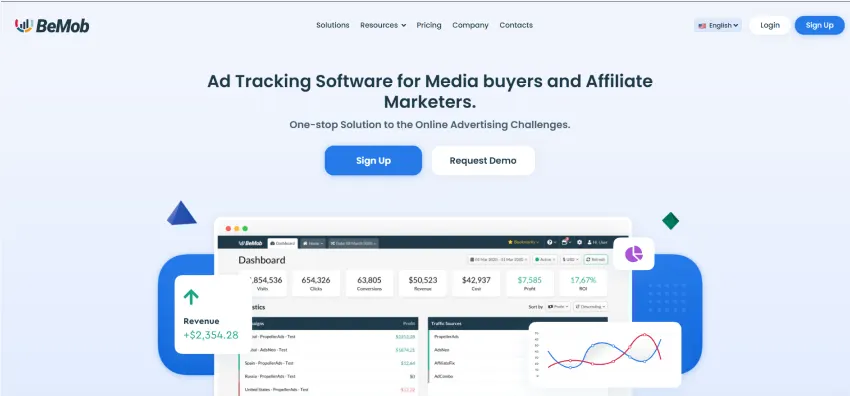
BeMob is a trusted online conversion tracking software used by media buyers, affiliate marketers, and businesses of all sizes to track FTDs. If you have one or more active campaigns, you can track them all in one place, in real time. The best part: you can change the dashboard’s default language to your preferred language, as the platform provides a multilingual UI and customer support.
Its benefits:
- Anti-fraud bot detection and cookieless tracking.
- Define roles and permissions to protect sensitive data.
- The auto-scaling feature prevents you from losing traffic.
- Integration with many high-converting traffic sources for steady FTD tracking.
Read More: Cookieless Advertising 2026: How Advertisers Can Prepare for the Post-Cookie Era
Voluum
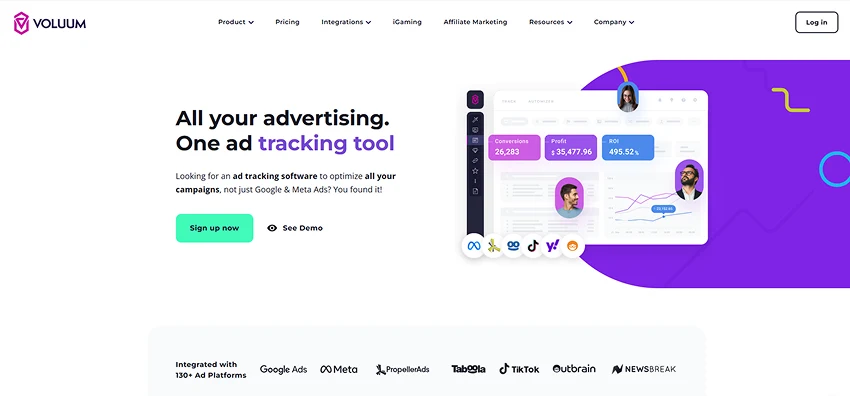
Voluum is a server-to-server (S2S) tracking platform that provides real-time conversion tracking, optimization, and automation for media buyers and affiliates, helping them scale and maximize ad revenue. It offers partnerships with a range of affiliate networks, traffic sources, and tools, so you don’t have to switch between platforms and have a hassle-free tracking experience.
Its benefits:
- Verified partnership with 70+ ad platforms.
- Seamless FTD tracking.
- Set custom permissions.
- Professional ad manager support.
RedTrack
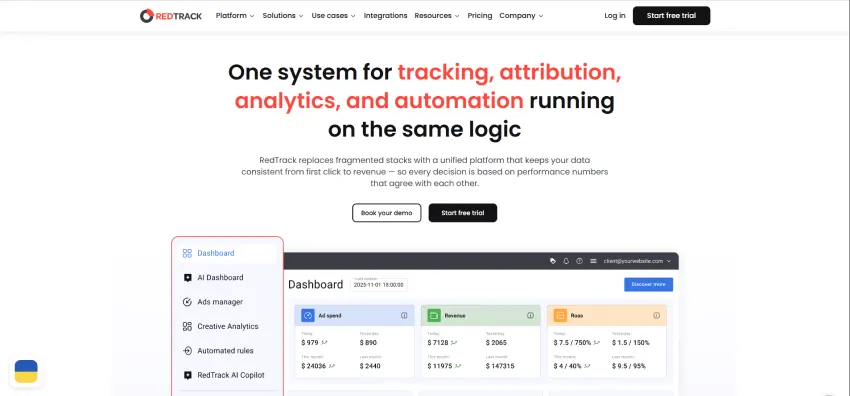
RedTrack is a comprehensive ad-tracking platform for all types of online conversion tracking, including FTDs. Track, attribute, optimize, analyze, and automate all your performance-driven campaigns from a single dashboard to make decisions based on numbers, not assumptions.
Its benefits:
- Ad campaign performance tracking by traffic source, offer, etc.
- User-friendly dashboard built with AI-powered features.
- Track conversion paths.
- Define roles and permissions.
- Grants full control and transparency over data.
How to Increase FTD Rate?
Users don’t always make their first deposit right after signing up; some take days, weeks, or even months. This delay in conversion can prevent you from reaching or surpassing your revenue goals. Here, you can apply a few strategies to increase your first-time depositor rate.
- Include real users’ testimonials and case studies.
- Retarget registered users through time-sensitive offers and deals.
- Send personalized, informative + promotional newsletters.
- Make the transaction process smooth and concise.
- Use progress indicators throughout the transaction process to encourage users to complete it.
- Offer multiple payment methods and make them visible.
- Make the terms and conditions easy to comprehend.
- Align the minimum deposit amount with your users’ behavior.
- Provide a consistent user experience across devices.
For instance, in Nigeria, 90% of the crypto activity happens on smartphones. Here, crypto businesses should retarget registered users on handheld devices with enticing offers and copy that align with the cultural nuances through their digital advertisements to increase first-time depositor rates.
Advice: Aim to convert first-time depositors into your loyal customers through engaging offers, content, and UI to maximize your overall profit.
Analyze to Make More Profit!
The sooner you shift your focus from vanity metrics to conversion-focused metrics, that is, FTD, the sooner you can start to witness positive results from your campaigns. You can also use the tools we’ve mentioned above to better track FTDs and optimize online ad campaigns based on insights. It’ll significantly help you increase your revenue and compete confidently.
If you’re looking for a platform to advertise your offers, consider our network, 7SearchPPC. It offers a user-friendly dashboard, a range of advertiser-friendly features, postback, and ad manager support to help you analyze and track your campaign’s performance. Don’t hesitate to reach out. We would be delighted to assist you!
Frequently Asked Questions (FAQ’s)
Q1. What is FTD?
Ans. First-time deposit is a conversion-focused KPI that measures the number of users who have successfully completed their first deposit on the platform.
Q2. What is the ideal FTD rate?
Ans. FTD rate varies by industry, advertising channel, and offers, but it’s wise to aim for a 10-20% FTD rate if you’re generating a high volume of signups.
Q3. Why do most advertisers struggle to boost their first-time deposit rate?
Ans. Advertisers fail to increase their first-time deposit rate because they don’t:
- Retarget registered users.
- Include trust-building factors.
- Provide personalized offers.
- Properly track users’ activity.
- Expand or optimize ad campaigns based on performance.
Q4. What are the other important conversion metrics for advertisers?
Ans. Signups, ROI, ROAS, and CPA are vital conversion metrics that advertisers track alongside FTD.
Q5. How is FTD tracking simplified using S2S tracking tools?
Ans. FTD tracking using server-2-server tools streamlines the entire tracking process in the following ways.
- Allows better tracking of Click_ID.
- Optimize campaigns based on insights.
- Track real-time conversion events.
- Analyze the touchpoints that helped generate the deposit.
- Determine the time it takes for users to convert into customers.
Q6. How can advertisers leverage postback data to increase FTD?
Ans. Using postback data, advertisers can:
- Filter out low-quality traffic that didn’t convert.
- Provide more useful content to increase customer lifetime value.
- Increase ad budget for top-performing channels, offers, and regions.
- Scale top-performing ad campaigns.
Q7. Is FTD tracking important for affiliate marketers?
Ans. Yes, FTD tracking is crucial for affiliate marketers. It helps them identify which offers, products, and services generate more deposits, so they can promote them more often to increase their overall revenue.