Key Takeaways!
- Laws governing cookie-based advertising were established to prevent advertisers from aggressively using users’ personal data in online ads.
- First-party, zero-party, and contextual targeting are some of the cookieless advertising strategies advertisers can use in 2026.
- The future of cookie-free advertising looks bright, as advertisers can practice more user-friendly tracking methods to collect data while satisfying users’ demand for no cookies.
- Cookieless digital advertising reduces dependency on third-party platforms.
Not too long ago, cookies were the backbone of digital advertising. They quietly tracked user behavior, helped marketers target the right audience, and made online ads feel almost personal. But things have changed fast. Privacy concerns, stricter regulations, and evolving tech have pushed cookies out the door.
So, what does cookieless advertising mean for advertisers in 2026? Instead of panicking, it’s time to rethink strategies and explore smarter, more privacy-friendly ways to connect with audiences. The post-cookie era isn’t the end of advertising—it’s the beginning of doing it better.
In this blog, we’ll break it down in simple terms and walk you through practical ways to stay ahead in the cookieless world.
What is Cookieless Advertising?
Cookieless advertising is a method of promoting products, services, and offers without depending on third-party data (cookies) for tracking, targeting, and measuring ads across different platforms.
In simple terms, this strategy uses privacy-first policies to reach and target users through digital ads without using third-party cookies.
What Are the Benefits of Cookie-free Advertising?
- Fulfill users’ demand for a privacy-first online experience.
- Stay compliant with regulations to prevent fines and penalties.
- Avoid targeting users based on irrelevant and inefficient third-party data.
- Own full control over the data.
- Reduce dependency on third-party platforms.
What Is the Difference Between First-Party, Second-Party, and Third-Party Cookies?
First-, second-, and third-party cookies are used to track user data for better targeting and to maximize ROAS. Let’s take a closer look at the terms!
| Parameter | First-Party Cookies | Second-Party Cookies | Third-Party Cookies |
|---|---|---|---|
| From where is the data being captured? | Signup forms and cookie banners are placed on the site to capture users’ data. | Form a direct partnership with relevant businesses to acquire their first-party data. | Purchase user data from third-party platforms. |
| What is the user tracking scope? | User tracking is limited to your own website. | User tracking is limited to partnered websites. | User tracking is broad. |
| What is the future adoption of the targeting strategies? | Very high. | Constantly booming. | Phasing out. |
| Example | An eCommerce website can send a series of informational newsletters to its subscribers to build trust and inform them about the brand’s products, services, and offers. | A healthcare brand can collaborate with a fitness brand to gain its first-party data. This allows the healthcare brand to target fitness enthusiasts and establish relevance by offering health and lifestyle tips. | If a user visits a fitness website, you can promote your online healthcare consultation services across platforms to target and convert them. |
-> Use of first- and second-party data is constantly increasing
-> It allows for more precise targeting to reach the right audience
Why Are Advertisers Moving Toward a Cookieless Advertising Ecosystem?
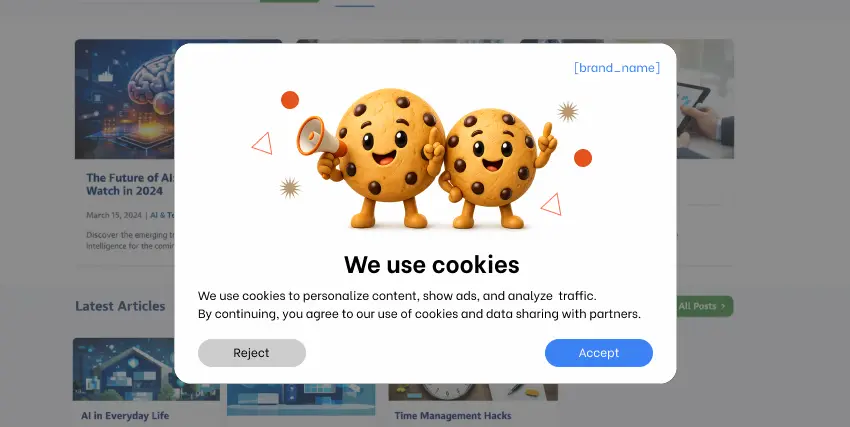
Not just one: there are many reasons to adopt a cookieless digital advertising ecosystem. Some of them are:
- Users don’t want to be tracked for their web activities.
- Consumers demand data transparency and privacy.
- Change in legal regulations.
- Major ad tech platforms and browsers are phasing out third-party cookies.
- Third-party data is often inaccurate and inefficient, preventing advertisers from targeting the right audience and resulting in wasted ad spend.
- By default, ad blockers prevent third-party cookies used for ad targeting and tracking.
In short:
- Privacy issue
- Browser limitation due to ad blockers
- Big ad-tech companies are preventing third-party cookies
- Third-party data is not always relevant
Because of a cookieless ecosystem, advertisers have to find new ways to engage prospects and convert them into customers. It has significantly impacted the early customer stages and made it harder to reach potential prospects.
How Does Preventing Third-Party Data Impact Advertisers?
Cookie-based advertising allows advertisers to track audiences at an extensive level, which ultimately makes targeting, remarketing, optimization, and performance measurement easier on a broader scale.
But now, to stay compliant with data laws like GDPR and CCPA, which limit how businesses collect and use personal data, advertisers have to find cookie-based advertising alternatives to reach their audience. This shift has significantly impacted the digital advertising ecosystem, making it more difficult for advertisers to:
- Track audiences across multiple sites.
- Retarget the audience based on their interests and behavior.
- Use audience data for aggressive advertising.
- Increase conversion rates while reducing cost-per acquisition (CPA).
Also Read – Tips for Affiliates to Stay Profitable in 2026 Amid Global Uncertainty
What Are the Most Effective Cookieless Targeting Strategies?
Some cookie-free targeting strategies you can use to better understand and track user behavior to succeed in a privacy-first, cookieless world are listed below.
Top Cookieless Advertising Solutions:
1. First-Party Data
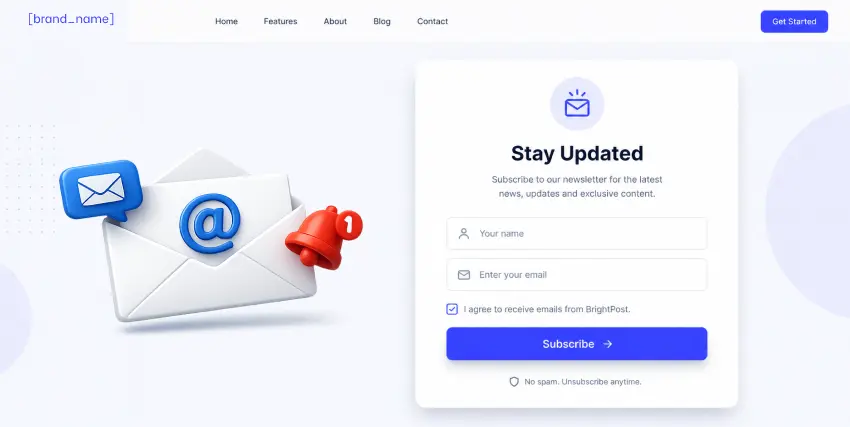
In first-party data, advertisers leverage data collected directly from their audience during active interactions with the website. This data lets you increase engagement with users who’re genuinely interested in your products, services, and offers.
Its benefits:
- Target users based on their website activity.
- Invest time and effort in understanding your genuine prospects.
- Perform precise targeting.
- Add a personal touch to your online ads.
- Capture accurate data with consent.
Ways to collect first-party data:
- Use analytics and reporting tools to analyze users’ behavior on the site, such as page sessions, traffic sources, which pages are visited, which products are purchased or abandoned, etc.
- Place lead forms and newsletter subscription options to gather potential prospects’ demographic and basic information.
- Include a short survey form to collect information, such as how they discovered your website, what they’re seeking, their experience, and how likely they are to repurchase or recommend your site.
- Heatmaps to analyze users’ navigational patterns.
- Place cookie banners that include a reject cookies option to respect users’ choices.
You can then use this data to provide personalized recommendations, better segment the audience, retarget based on preferences, and optimize the customer journey for higher returns.
For instance, if a user adds a product to their cart but leaves without making a purchase, it can be due to several reasons, such as they’re not ready to buy yet, the price being too high, they need more convincing reasons like a refund policy, the preferred payment method not being available, or the UI not feeling trustworthy.
Now you can send survey emails or use tools like Hotjar to identify the root cause of abandonment and make the much-needed changes to convert more users.
Zero-Party Data
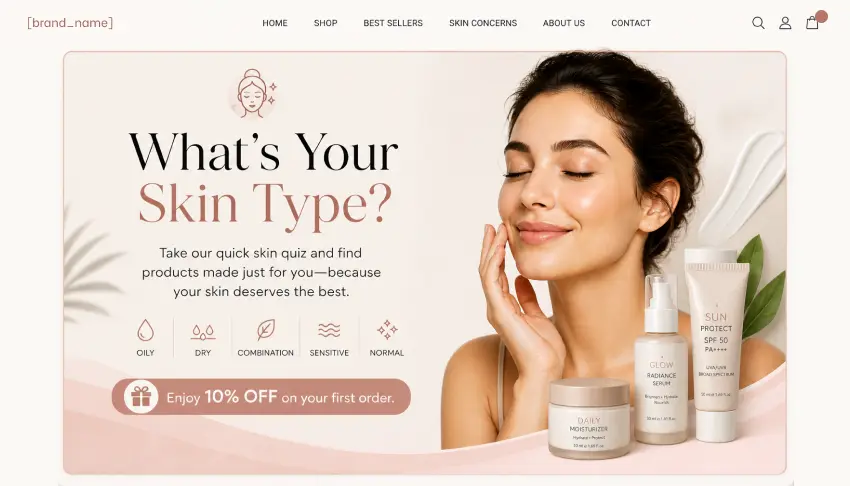
Information that users intentionally provide with full consent, such as chat preferences, product choices, and so on, to personalize their interactions with the brand falls under the zero-party data.
Its benefits:
- Users willingly provide information.
- Information can be collected without violating customer privacy regulations.
- The online ads feel highly personalized.
- Users are fully aware of the information they are sharing and how it will be used in the future.
- Helps better understand users’ needs, preferences, and desires.
Ways to collect zero-party data:
- Run interesting quizzes and surveys.
- Place feedback forms.
- After successful registration, ask users what they would like to explore.
- Provide offers and discounts to gather data.
- Deploy bots trained with all user-specific queries.
For instance, a cosmetic brand can ask its users about their skin type, issues, and preferences in exchange for discounts to personalize their website and ad experience.
You can naturally collect users’ data, which is more accurate and reliable. It improves advertising effectiveness and efficiency, helping you increase interaction, engagement, and ROI. You can also build stronger relationships with customers and increase their lifetime value. Overall, it’s an effective cookieless advertising solution.
Contextual Targeting
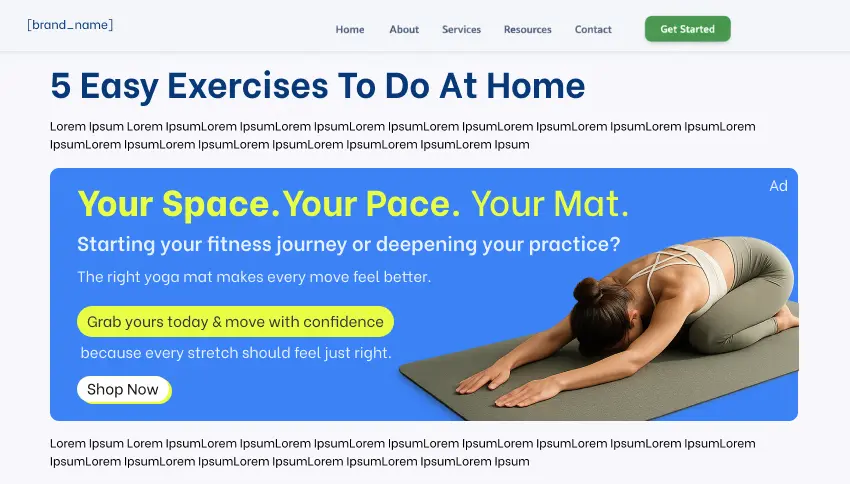
Contextual targeting is a cookieless advertising strategy in which online ads are placed based on a website’s content rather than user data. It allows you to engage with users who are browsing content that is relevant to your products and services in real time, which ultimately increases the likelihood of conversion.
In fact, 94% of online consumers prefer contextually relevant online ads over those targeted based on their browsing habits.
Its benefits:
- Provides recommendations that match the content users are currently viewing.
- Increases engagement with users who are more likely to convert.
- Eliminates the need to rely on user data for targeting.
- Enables the execution of programmatic contextual targeting.
What do you need to implement contextual targeting?
- Pick relevant keywords and topics.
- Register on a contextual ad platform.
- Create intuitive ad creatives.
- Keep the ad copy concise and add eye-catching offers.
Example: Yoga mats, fitness equipment, and accessories placed on healthcare, fitness, and eCommerce websites are more contextually relevant.
Ads receive high engagement because they are placed across relevant content that matches users’ interests, without collecting their data.
🎯 Bonus Point: Tips on Collecting Users’ Data in a Cookieless World
- Maintain a good UI experience across devices.
- Avoid being overly aggressive with cookie banners.
- Be transparent about the data you collect and how you use it.
- Integrate multiple methods to gather users’ data.
- Highlight trust-building elements.
What is the Future of Cookieless Advertising?
Let’s explore how digital advertising in the cookieless world will look in the coming years!
- On a broader level, there isn’t a blanket removal of cookies. Instead, major browser extensions, including Google and Microsoft, are adopting a user-choice model that lets users decide which data to save, delete, or block.
- First-party, zero-party, and contextual targeting are the primary alternatives to cookie-based advertising. However, the adoption of the following cookieless advertising strategies will also expand in the future.
- Cohort-Based Targeting
- Second-Party Data
- Data Clean Rooms
- Server-Side Tracking
- Advertisers will invest more in AI tools to better comprehend the interests and behaviors of their lookalike audiences. It will significantly help them identify and fill data gaps to target their audience more accurately.
Overall, removing third-party data for advertising isn’t a major issue for advertisers, as there are several cookieless advertising solutions. All of these can gather users’ data more organically, helping advertisers build relationships that are more transparent and potent.
Read Also – What Is FTD Tracking in Advertising? Definition, Benefits, and How It Works
What’s Next? Maximize Cookieless Digital Advertising Efforts!
Start integrating tools to maximize your digital advertising efforts in the cookieless world. Some of the tools you can consider for cookieless advertising in 2026 are:
- Digital Analytics Tools
- Consent Management Platforms (CMP)
- Ad Platforms (allow RTB for contextual targeting)
- Server-Side Tracking Tools
- Customer Relationship Management (CRM) Tools
- AI Tools
These tools offer seamless tracking, targeting, and user management, helping you better understand your user behavior and target accordingly to maximize your online marketing efforts.
Need help advertising online? Reach out to us. We’ll help you connect with your potential audience based on your advertising goals.
Frequently Asked Questions (FAQ’s)
Q1. What are the common mistakes advertisers make when collecting users’ data?
Ans. Some of the mistakes advertisers make when collecting users’ data are:
- Ask for too much information.
- Compel users to accept cookies.
- Not using multiple alternatives to collect users’ data.
- Failing to implement proper data security measures.
- Ignoring customer data privacy policies.
- Failing to inform users about what data is being collected and how it will be used.
Q2. What are the key challenges advertisers face after the post-cookie era?
Ans. After the post-cookie era, advertisers encounter the following challenges when targeting users:
- Hard to reach users on a larger scale.
- The prospect-to-customer conversion rate is affected.
- The lack of third-party data will affect the overall ROI.
Most users close the consent banner immediately, preventing marketers from collecting required data for tracking.
Q3. What are third-party cookies?
Ans. Third-party cookies are the tracking files used by ad tech platforms, data brokers, and data management platforms to track users’ online activity across websites and platforms. Mainly used to track, target, and re-target users to create awareness, build trust, and convert them into customers for the business.
Q4. Why are third-party cookies phasing out?
Ans. Third-party cookies are phasing out because:
- Users demand transparency and full control over their data.
- Customer-privacy regulations are being tightened.
- Major browsers are either restricting or completely removing third-party data collection.
Q5. How can contextual targeting help advertisers reach their target audience?
Ans. Some of the benefits of contextual targeting are mentioned below:
- Ads appear on websites that match the relevance of your products, services, or offers.
- Users’ personal data is not needed.
- Boost ad engagement and conversion rates.
Q6. Is cookieless advertising more customer-friendly?
Ans. Yes, cookie-free advertising is more customer-friendly because it’s transparent and gives users more control over their data.
Q7. What is the impact of cookieless advertising?
Ans. The impact of cookieless advertising is remarkable: you can collect users’ data with their consent and expand your reach among users interested in or willing to consume your products and services.