Core Insights!
- High-quality backlinks from trusted, relevant websites improve SEO and build credibility.
- Low-quality or spammy backlinks can harm your website’s reputation and rankings.
- Relevant backlinks from your industry are more valuable than unrelated links.
- Focus on earning a few strong backlinks instead of many weak ones.
- Create valuable content and use ethical link-building strategies for long-term SEO success.
Backlinks are simply links from other websites that lead to your website. These links are regarded as a sign of trust by the search engines. If your site receives links from reputable websites, that is a sign of your site having an offering of value to search engines.
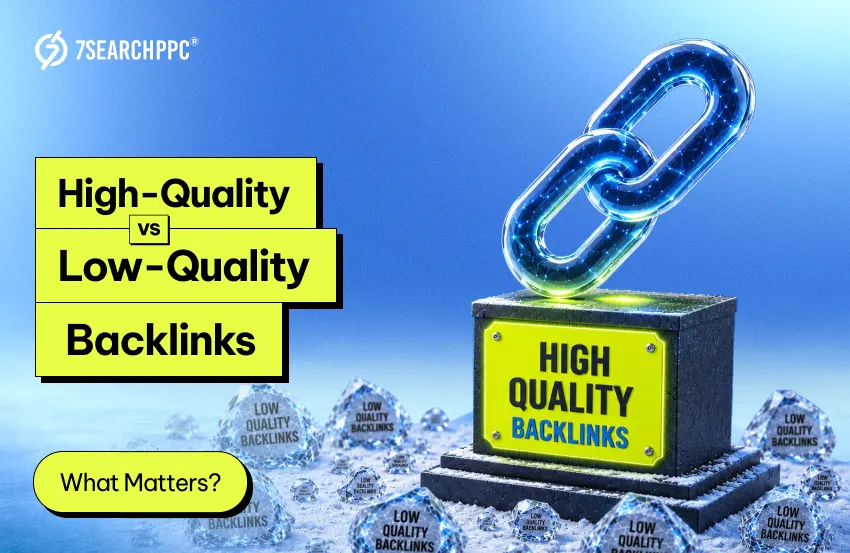
But not all backlinks are created equal here. One high-quality backlink can often be more beneficial than dozens of low-quality ones.
So, what matters most? Explore this blog to find out.
How to Identify Quality Backlinks
Consider a backlink as a recommendation. They will trust you more if a respected expert suggests your business. This principle is the same for search engines.
A good backlink is normally generated from a reliable, authoritative website that’s associated with your business. It is found naturally in beneficial information and adds value to the reader.
If you are a fitness blogger and get a link from a popular health website, it is a good indicator of credibility.
Quality backlinks aren’t only beneficial for ranking—they may additionally supply real website visitors who are truly curious about your material.
The Hidden Cost of Untrustworthy Backlinks
Now, if you’ve received hundreds of recommendations from untrustworthy sites, what happens? Would the recommendations do you a favor to your reputation?
Probably not.
Poor quality backlinks might be from spam sites, irrelevant directories, PBPN, or pages just created for the purpose of link building.
There are websites that even sell thousands of backlinks for extremely low prices. That can be the most attractive option, but it is often damaging.
Search engines have improved over the years in their ability to detect unnatural link patterns, and using low-quality backlinks may negatively impact your site’s credibility in the long run.
That’s why it is important to focus on building high-quality backlinks from relevant and authoritative sources.
The Role of Relevant Backlinks in Building Online Authority
It’s a matter of authority, but it’s a matter of relevance.
Imagine that you are a pet owner who has an online retail store. A link from a well-known website in the pet field will certainly be more valuable than a link from a random website, such as one about car repair.
Why?
Because it’s a logical linkage.
Search engines look for backlinks that are relevant to the content of what users are searching for. Your industry-related backlinks help to build industry authority and build overall trustworthiness of your site.
Quality Backlinks Matter More Than Quantity
Years ago, SEO was thought of more as a numbers game. Businesses are concentrating on getting as many backlinks as possible. Unfortunately, that approach no longer works today.
How about having 500 backlinks that aren’t high quality but from unknown sites or 10 links from reputable industry sites?
Most SEO experts will opt for the second choice.
Fewer, more powerful links will typically provide more lasting links than a ton of links that are not very strong.
Why Quality Link Building Requires Professional Assistance
Obtaining high-quality backlinks can be challenging. Research, relationship building, content creation, and consistent outreach are required.
A professional link-building agency will concentrate on acquiring backlinks from relevant and trusted sites rather than using shortcuts or risky methods. They recognize the significance of search engines and can benefit businesses in developing their backlink profile over time.
Hiring seasoned SEO professionals can save companies time and effort, especially if they do not have an in-house SEO team.
The Link Building Mistakes That Hold Businesses Back
The major error that businesses make is purchasing low-quality backlink packages that guarantee hundreds or even thousands of links in a matter of moments.
If it seems too good to be true, it isn’t.
The other common pitfall is that some people are only concerned about domain authority, and not relevance. Even if a website is very strong, it isn’t necessarily the best place for your backlink if it doesn’t relate to your industry.
There are some businesses that also neglect creating something useful. If there is no content to link to, the best outreach effort is wasted.
Quality content and quality backlinks go hand in hand.
Building Backlinks The Right Way
Building strong backlink profiles is an ongoing process, rather than a quick one, and using a backlink monitoring tool can help ensure that valuable links remain active over time.
Guest blogging on reputable blogs, networking within your industry, and developing resources that people are interested in referring to are also great long-term strategies. To ensure that these strategies are implemented in unison, as opposed to quick fixes, many businesses will work with a trusted link-building agency or expert.
Conclusion
While backlinks are still one of the most important ranking factors in SEO, the quality of the backlinks is what really counts. A handful of meaningful, authoritative backlinks can really help boost your website’s ranking, while numerous low-quality links can barely make a difference, if any.
Don’t play the shortcut game, but work on getting links that are useful to search engines and readers.
The more relevant, credible, and useful content you provide, the better your backlink profile will be. In the realm of SEO, long-term success beats short-term gains, time and time again.
Frequently Asked Questions (FAQs)
Q1. What are high-quality backlinks?
High-quality backlinks come from a trusted, relevant, and authoritative website. It is placed naturally within useful content and provides value to readers.
Q2. What are low-quality backlinks?
Low-quality backlinks come from spammy, unrelated, or low-value websites. These links may not help your SEO and can even hurt your website’s reputation.
Q3. Can low-quality backlinks affect my website?
Yes. Too many low-quality backlinks can make your website look untrustworthy to search engines and may reduce your rankings over time.
Q4. Why is backlink relevance important?
Relevant backlinks come from websites in the same or related industry. They show search engines that your content is connected to a specific topic, making the link more valuable.
Q5. Is it better to have more backlinks or quality backlinks?
Quality backlinks are always the smarter choice. A few strong, relevant links are usually more valuable than hundreds of weak or spammy ones.