Key Takeaways!
- Media buyers implement the plan created by media planners and aim to acquire ad slots at the lowest possible cost.
- Direct, traditional, and programmatic are various types of media buying.
- Social media platforms can generate significant profit for ad space buyers, as reel ads receive 41% more clicks than static ones.
- The retail media platform Amazon alone accounts for 75% of the US market share, making it a prominent platform for eCommerce media buyers.
- Overheated auctions, fraudulent traffic, and cookieless tracking are some of the challenges in media buying.
Media buying often looks simple from the outside—choose a platform, set a budget, and let the ads run. But once you get into it, you realize how much research, analysis, and evaluation go into every decision.
- Where should the ad appear?
- Who should see it?
- How much is too much to spend?
These are the kinds of questions media buyers deal with every day.
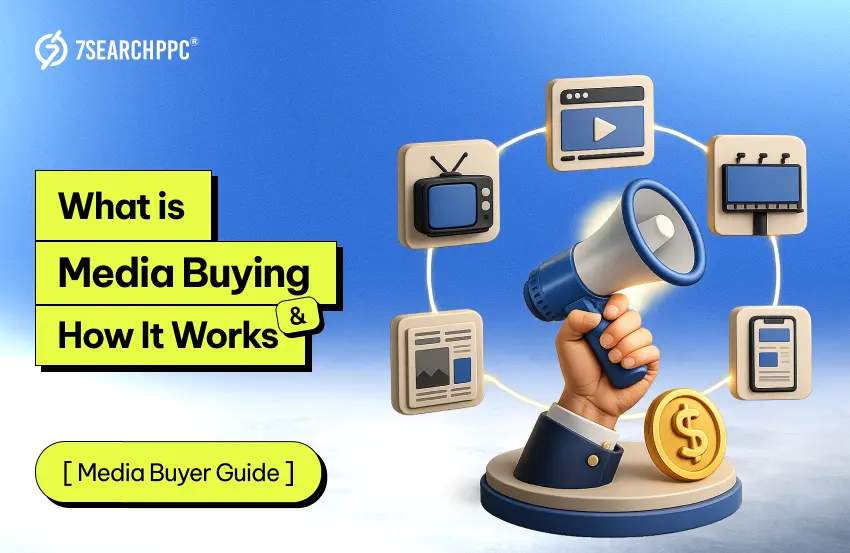
Media buying isn’t just about spending money—it’s about spending it wisely to get real results. In this guide, we’ll break down everything you need to know about media buyers and media buying in the simplest way, so you can make better decisions and avoid common mistakes.
What is a Media Buyer?
A Media buyer is an advertising professional who works closely with media planners to accurately execute advertising strategies, purchase ad space on traditional or digital platforms at the lowest cost, and monitor performance to optimize campaigns and increase ROAS.
In short, media buyers aim to purchase ad inventory across a combination of traffic sources, including social media, search engines, websites, mobile apps, and traditional channels like TV, radio, and print, to achieve maximum brand exposure and recall at the lowest cost.
A skilled media buyer:
- Reduces CPA cost.
- Increases ROI.
- Improves campaign performance.
The Role of a Media Buyer in the Media Buying Process
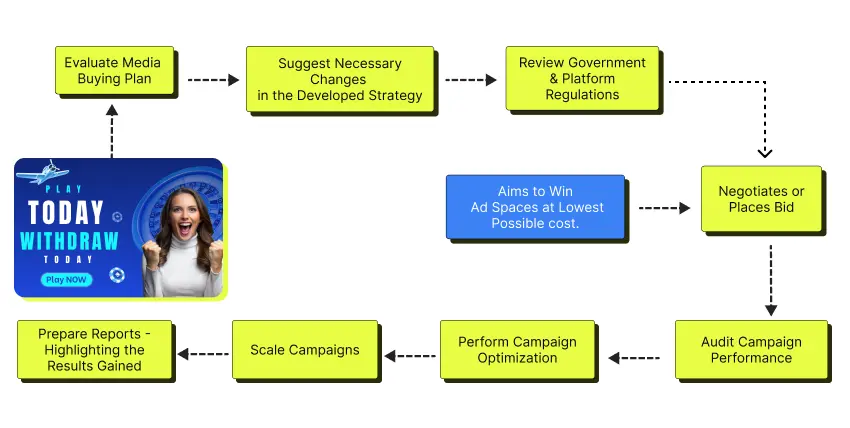
Media buyers handle direct negotiations, optimize advertising strategies, manage budgets, adjust bids, and aim to reach the right audience at the right time. They follow a systematic approach to buy real media space and drive positive results with minimal ad spending.
The role of a media buyer is to:
- Engage with Media Planners: After receiving the advertising plan, media buyers interact with media planners to understand the overall objective and suggest required changes to make the campaign successful.
- Acquire Media Spaces: Media buyers research and select the most suitable platforms within relevant niches to run ad campaigns and drive traffic. They negotiate prices and book ad placements to reach the right audience within the given budget.
- Track Campaigns: They closely monitor campaign performance and make real-time changes to prevent overspending and reduce CPA.
- Prepare Campaign Reports: Prepares campaign reports after a specified timeframe to visually represent performance, identify advertising gaps, and highlight positive outcomes. Detailed reports help to achieve future campaign goals more effectively.
In short, media buying involves:
- Understanding the project.
- Suggesting required changes.
- Negotiating direct media deals with publishers.
- Executing and optimizing bidding strategies (manual or AI-driven).
- Auditing and optimizing campaign performance.
- Scaling campaigns and preparing reports.
What are the Challenges in Media Buying?
Media buying isn’t as seamless as it seems. Paid media specialists also face several challenges when purchasing ad spaces. Some of them are:
- Bot impressions and clicks
- Intense competition in high-demand niches
- AI-based bidding can raise advertising costs
- Cookieless targeting and tracking
- Weak attribution across touchpoints
Paid media buyers closely monitor campaigns, increase the use of tracking tools, and adopt customer-privacy-focused strategies to overcome challenges and effectively promote the brand’s message. This helps to maintain performance and achieve higher ROI.
Media Buyer vs. Media Planner: Key Differences Explained
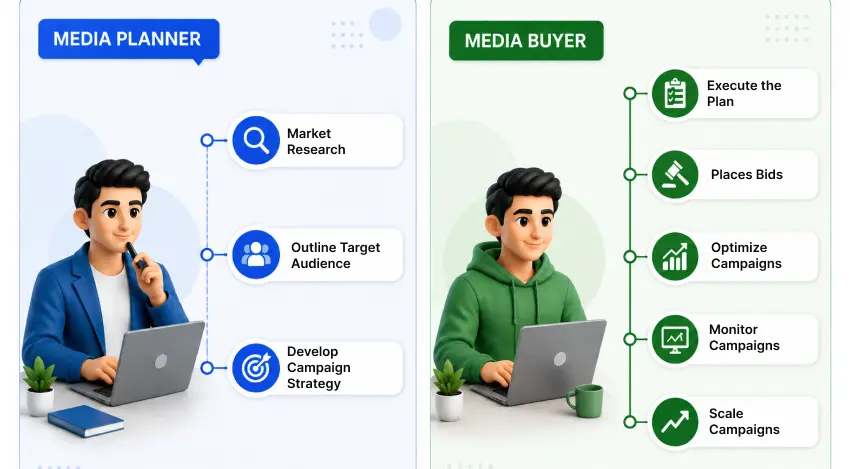
A media planner conducts thorough market research to identify the best advertising channels, target audience, timeframe, and budget for advertising campaigns.
A media buyer executes the advertising plan created by the media planner. They are responsible for selecting the best advertising space, with a clear understanding of marketing goals and the target audience, to ensure effective promotion of products or services.
Media Buyer and Media Planner: Comparison Table
| Parameter | Media Planner | Media Buyer |
|---|---|---|
| What do they do? | Creates an advertising plan based on the brand’s goal. | Executes the media buying plan and allocates the budget wisely. |
| What is the primary goal? | Aim to understand users’ behavior and interests. | Aim to buy cost-effective mobile or web traffic. |
| Who sets and tracks KPIs? | Set the campaign’s KPIs. | Monitor the set KPIs to improve performance. |
| Example | Planners decide to target the web audience to promote the new clothing brand through online display ads. | Run online display ads on the selected platform, set targeting, audit performance, and optimize campaigns in real time. |
What are the Different Types of Media Buying?
Ad inventories can be acquired through various methods. The most popular ones are direct, traditional, and programmatic. Let’s explore them.
1. Direct Media Buying: In direct media buying, media buyers form one-to-one communication with publishers to purchase ad space. It involves direct negotiation to secure ad placements without intermediaries. This approach allows better control over pricing, targeting, and placement quality.
Benefits:
- Know where the ad is being placed.
- Publisher and website credibility are known.
- No need for intermediaries, reducing overall campaign costs.
- More control over ad placements.
- Build long-term relationships with publishers.
- Media space can be purchased for a specific timeframe.
- Manually negotiate to purchase media spaces at the lowest possible price.
Example: A media buyer of a fitness brand promotes its new protein supplement by directly contacting the popular health website ‘Healthline.’ The advertiser negotiates with the website’s media team to place a banner ad in the “Nutrition” section for one month. All details—pricing, placement, and targeting—are finalized without intermediaries, giving the advertiser full control and clear visibility into where their ad appears.
2. Traditional Media Buying: It involves purchasing ad inventory from channels such as print, TV, radio, and billboards to reach a mass audience that still prefers offline media.
Benefits:
- Reach a mass audience from a single inventory.
- It’s easier to build brand credibility.
- Don’t rely on the internet to display ads.
Example: Placing billboard banners in a popular mall at a spot that instantly captures shoppers’ attention to the brand offerings.
3. Programmatic Media Buying: This type of media buying relies on automated technology and algorithms to buy digital ad space in real time. It helps target the right audience using data, making ads more efficient, cost-effective, and personalized without manual negotiation.
Benefits:
- Automates real-time bidding processes.
- Removes manual negotiation.
- Fast, accurate, and reliable.
Example: An advertiser connected to a DSP uses AI to automate bidding and purchase premium spaces across multiple websites and apps within seconds.
What are the Top 5 Media Buying Channels in 2026?
Ad space buyers can reach a mass audience and increase ROI using the proven media-buying channels listed below.
1. Search Advertising Platforms
Media buyers can reach a massive audience and buy high-intent traffic by bidding on industry-related keywords through popular search engine advertising platforms like Google Ads, Microsoft Advertising, etc.
Google leads the global search engine market with an 89.85% share, followed by Bing with 5.13% in the first quarter of 2026. Yahoo!, Yandex, and DuckDuckGo are also ideal for launching lead-generation and conversion-focused campaigns.
2. Advertising Networks
Media buyers register on trusted ad networks to purchase premium ad inventories from top publishers and promote their brand’s offers without direct interaction.
You can consider using 7SearchPPC, a leading advertising network that provides effortless campaign creation, postback integration with high-performing tracking tools, and targeting options to reach ideal audiences through an easy-to-use interface. It offers native, text, banner, in-page push, and popunder traffic within your advertising budget.
Also Read: What is an Ad Network: How it Works and Why it Matters?
3. Social Advertising Platforms
Social advertising platforms are among the most widely utilized media buying channels. It allows media buyers to run paid ads across Meta Ad Manager, X, LinkedIn, and TikTok, and enables advanced targeting to reach lookalike audiences through visually engaging ads.
The following data shows how effective these platforms are for purchasing ad spaces:
Reels ads generate 41% more clicks than static ads. In the United States, Stories account for 44% of total impressions, while the Feed contributes 31%. Highlighting social media ad placements offers significant potential for media buyers.
4. Retail Media Advertising Platforms
Media buyers buy ad spaces on retail media platforms like Amazon Ads and Walmart. These platforms enable advertisers to reach customers where they shop. In media buying, this is powerful because ads reach consumers with high purchase intent, helping improve conversions and giving access to valuable first-party shopper data.
| “44% shoppers make a purchase decision because of a retail media ad. Amazon dominates the retail media market, controlling 75% of the US market share. |
Since users actively seek reviews and product recommendations, their purchase intent is already high, and contextual relevance just makes it easier to convert them. In fact, marketers can achieve three times the ROAS by purchasing retail media placements.
5. Ad Exchange Platforms
An ad exchange is a marketplace that connects DSPs, SSPs, and ad networks and offers real-time bidding for digital ad inventory across websites and apps. Media buyers use these platforms to target specific users, bid in real time, track performance, and tweak campaigns to improve results and allocate their budget more effectively.
| “84.9% revenue is predicted to be generated through programmatic advertising by 2030. Dynamic, real-time budget allocation to top-performing places will make ad exchanges more popular among advertisers. |
Also Read: Ad Exchange vs Ad Network: What’s the Difference?
What are the Effective Media Buying Strategies in 2026?
Some tactics media buyers can integrate into the media buying process to increase ad profitability are listed below.
- Use a Hybrid Approach: Combine automation with manual oversight to avoid bidding on irrelevant ad placements and improve efficiency.
- Track Your Performance: Use analytical tools to audit your online campaigns and make data-driven decisions to improve performance.
- Cross-verify Everything: Evaluate the media planner’s strategy to ensure you’re targeting and bidding for the right audience on the right platforms. Also, verify that the creatives and copies align with your brand’s message and target audience.
- Review the Platform’s Guidelines: Before buying ad space on any network or platform, read their advertising guidelines to maintain compliance and avoid ad waste.
- Utilize Dayparting Strategy: Increase bids for high-converting hours, days, occasions, and festivals to improve ROI.
- Maintain an Optimal Frequency Rate: Set a limit on how many times a user can see the online ads to prevent ad fatigue. It will help you improve user experience and prevent overspending for the same impressions.
- Adopt an Omnichannel Advertising Approach: Distribute the ad budget across multiple platforms to run A/B tests, and allocate budget to high-performing ones.
What are the Media Buying Trends?
The methods for purchasing ad inventories, the formats used, and the tools involved are continuously evolving. Predictions suggest that media buying in digital advertising will experience the following upcoming changes.
Future of media buying:
- The media buying service market size is predicted to reach USD 290 billion in 2033, almost double the USD 150 billion spent in 2024.
- Media buyers will spend $69.33 billion on retail media networks (RMN) in 2026, up from $58.79 billion in 2025.
- Connected TV (CTV) is becoming popular among ad buyers.
- The use of media buying channels, including ad exchanges, ad networks, and retail media, will grow rapidly in the coming years.
- Programmatic media buyers will adopt a hybrid advertising approach to increase efficiency while maintaining accuracy.
- Ad space buyers will increase the use of AI tools to optimize copies and creatives.
Media Buyers, Your Next Step is to Learn and Adapt to the Changing Advertising Environment!
From text to display ads and from traditional to online, media buying in advertising is constantly growing and changing. You have to keep learning about the industry changes to stay competitive and drive positive results for the business.
Digital media buying 101 is now in your hands! If you’re looking to purchase premium ad inventories, you can contact us and start promoting your brand’s message through an easy-to-use interface.
Frequently Asked Questions (FAQs)
Q1. What is media buying?
Ans. Media buying is the process of purchasing ad spaces from traditional and digital media such as TV, print, radio, websites, social media, search engines, etc., to promote a brand’s products, services, and offers.
Q2. What is media planning?
Ans. Media planning is the strategic process used by professionals to create a detailed plan for media buyers, including budget, audience, placement, timing, offers, and messaging, to better target audiences and generate profit.
Q3. What are the different types of media buying?
Ans. Different types of media buying are:
- Direct Media Buying
- Traditional Media Buying
- Programmatic Media Buying
Q4. Why is media buying important in digital advertising?
Ans. Media buying ensures your online advertisements appear in the right places and at the right times to reach the right audience, while spending your budget wisely to maximize ROAS.
Q5. What is the role of a media buyer in digital advertising?
Ans. The role of a media buyer in digital advertising is to purchase, manage, and optimize ad inventory to increase profits while adhering to a strict ad budget.
Q6. From where can media buyers find affordable web traffic for online ads?
Ans. Ad networks like 7SearchPPC facilitate media buyers to buy premium web traffic at an affordable cost.