Key Takeaways
- Budget pacing helps control how your ad budget is spent over time, keeping campaign delivery steady and balanced.
- When the pacing of the campaign budget is managed well, your ads stay visible to the right audience, campaigns optimize more effectively, and you get better returns on your investment.
- Different pacing methods, such as daily, dynamic, lifetime, and static pacing, are designed to support different campaign goals.
- Smart budget pacing strategies help maximize ad performance and budget efficiency.
- Poor pacing can lead to overspending, underspending, and weaker results.
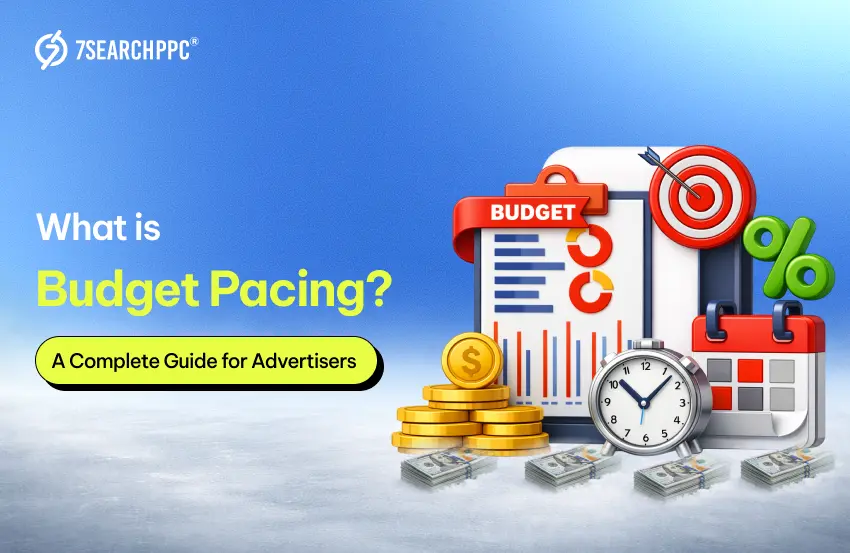
Ever felt like your ad budget disappears too quickly on some days and barely gets used on others? If yes, you’re definitely not aware of budget pacing. Through this approach, advertisers control how their budget is spent over a specific period, so they don’t run out too soon or underspend by the end of the campaign.
In this blog, we’ll break down what budget pacing means, why it matters, and how it can offer effective results from your ad spend without any guesswork.
What is Budget Pacing?
Budget pacing involves controlling how a budget is allocated and spent over a fixed time period. This approach is commonly used by advertisers to maintain consistent ad spending, achieve steady performance, and better control campaign results. This overall helps prevent the budget from being spent too quickly or too slowly.
To put it simply:
If you have a $1,000 monthly budget, pacing ensures you don’t:
- Spend $800 in the first week (too fast), or
- Spend only $200 by the end of the month (too slow).
Why it matters:
- Prevents budget exhaustion too early.
- Ensures consistent performance over time.
Difference Between Budget Pacing and Budget Allocation
Advertisers often mix up budget pacing and budget allocation, which is completely understandable. Although both are related to how a campaign budget is spent, they serve different purposes and affect campaign performance in different ways.
To make the difference clearer, let’s look at each one with a simple practical example:
Budget Allocation
It is the process of distributing available ad funds across various marketing channels. It relies heavily on planning and data analysis, including past performance, audience understanding, and identifying platforms with strong potential for engagement and conversions.
Let’s take an example: A company has $10,000 for advertising and allocates it as follows:
- $7,000 to 7SearchPPC.
- $3,000 to social media advertising campaigns.
It essentially answers the question: “How should we distribute our ad budget?”
Budget Pacing
Budget pacing is about how quickly or slowly you spend that money over time.
Let’s take an example: Suppose you have a $7,000 budget allocated for your 7SearchPPC ad campaign over 30 days. With proper pacing through a daily budget, you would aim to spend about $233–$234 per day. Without pacing, you might spend $6,000 in the first 10 days, leaving you with a limited budget for the remaining 20 days.
It essentially answers the question: “Are we spending at the right speed?”
Benefits of Budget Pacing for Advertisers
Advertisers gain several benefits when they utilize budget pacing through their ad campaigns. Some of the key benefits include:
- Consistent Ad Delivery: Budget pacing helps your ads run evenly throughout the day or month instead of spending the entire budget too quickly. This ensures your ads stay visible for a longer period and prevents them from stopping unexpectedly.
- Better Performance Optimization: With pacing, you can see what is working and adjust your ads step by step. It helps you shift money to better-performing ads instead of wasting budget on ads that do not perform well.
- Cash Flow Control and Forecasting: Budget pacing makes it easier to manage your spending over time. You know how much you will spend each day, so you can plan your cash flow without surprises or last-minute budget issues.
- Reducing Inefficient Spending: Pacing the ad budget prevents you from spending too much too early in the campaign. It spreads your budget wisely so you avoid wasting money on low-quality clicks or poor-performing ads, which overall improves efficiency.
- Strategic Timing Control: Budget pacing lets you choose when your ads show more or less during the day. This helps you target busy hours and avoid wasting money when your audience is less active.
Different Types of Budget Pacing
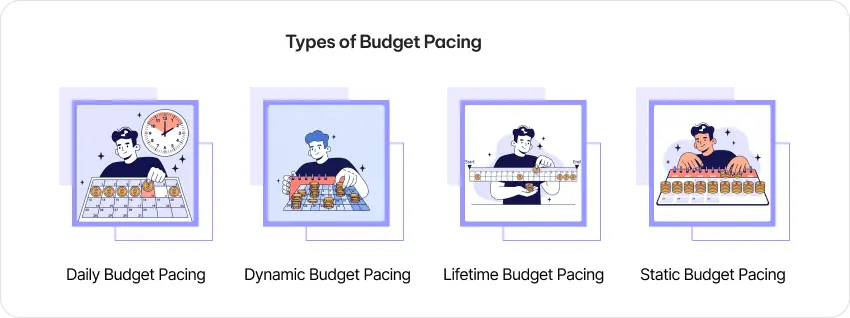
Understanding different budget ad spend pacing methods helps advertisers spend their money more wisely, maintain better control over their campaigns, and choose the right approach for their specific goals.
Here are the main types of budget pacing available for advertisers:
- Daily Budget Pacing: The budget is spent evenly throughout the day (or across the hours of the day) to maintain a consistent daily spend. It works best when you want predictable spending, steady delivery, and easy day-to-day performance tracking.
- Dynamic Budget Pacing: The spending rate changes automatically based on performance, timing, or campaign needs. It may spend more or less at different times. This overall helps you learn faster, capture better opportunities, and respond to market changes.
- Lifetime Budget Pacing: The total budget is spread across the entire campaign duration, from start to end. It is useful for campaigns with fixed dates because the system manages spending to ensure the budget lasts until the campaign finishes.
- Static Budget Pacing: The budget is spent at a fixed and consistent rate throughout the campaign. It provides maximum stability and is useful for testing, reporting, or controlled delivery, but it does not adjust much to changes in performance.
Formulas for Calculating Ad Budget Pacing
Ad budget pacing formulas help you track whether campaign spend is aligned with the planned budget over time. Here are the most commonly used formulas in digital advertising and media buying.
1. Basic Budget Pacing Formula

What Each Part Means:
- Actual Spend: The amount already spent on the ad campaign.
- Expected Spend: The amount that should have been spent by that point in time according to the budget plan.
2. Planned Spend Formula

What Each Part Means:
- Total Budget: The full amount of money allocated for your campaign over the entire period.
- Time Elapsed: The amount of time that has passed since the campaign started.
- Total Time: The complete duration of the campaign period (total days/hours/minutes).
- Planned Spend: The amount that should have been spent by now.
3. Daily Budget Pacing Formula

What Each Part Means:
- Total Budget: The total amount allocated for the campaign.
- Total Days: The total number of days the campaign will run.
4. Spend Deviation Formula

What Each Part Means:
- Actual Spend: The amount that has actually been spent so far in the campaign.
- Planned Spend: The amount that was expected to be spent.
- Deviation: The percentage difference between actual spend and planned spend. It shows whether the campaign is overspending or underspending.
Disclaimer: The following budget pacing formulas are not limited, as many other methods exist, each with its own approach and suitability depending on the context. Users are advised to understand the features and assumptions of each formula before applying it and to choose the one that best fits their specific requirements.
Successful Budget Pacing Strategies
Successful ad spend pacing strategies ensure budgets are spent efficiently over a defined period without overspending early or underspending later. Here are the most effective budget pacing strategies for advertisers.
1. Set Your Pacing Goals
Start by setting your campaign goal, such as getting more clicks, impressions, or conversions. Ask yourself: How much can I spend each day? Or should the budget last for the entire campaign?
Having clear goals will help you make better budgeting decisions and avoid overspending or depleting your budget too quickly.
2. Choose Even Pacing for Daily Spending
If you want your ads to run steadily throughout the campaign, you can go for even pacing. This approach helps spread your ad budget evenly across all campaign days, resulting in a consistent daily spend.
3. Go for Strong Start Pacing for Better Visibility
When you need to make an impact quickly, strong start pacing is a good choice. It allocates a larger share of your budget during the first few days of the campaign to generate immediate visibility and engagement. Just be sure to monitor performance closely so you don’t exhaust your budget too early.
4. Switch to Strong Finish Pacing for End-of-Campaign Promotions
If your goal is to create momentum toward the end of a campaign, use strong finish pacing. This strategy spends less budget in the beginning and gradually increases spending during the final days.
This approach works especially well for events such as month-end sales or tournament finals, when audience interest and the sense of urgency are at their highest.
5. Use Metric-Based Pacing for Performance-Focused Campaigns
If getting specific results matters more than sticking to a fixed timeline, use metric-based pacing. Set a goal, like you want to achieve 100 conversions, and let the system automatically adjust spending to achieve it.
This method works best for affiliate marketers who care more about results than just impressions or clicks.
Budget Pacing Pitfalls: Common Mistakes You Can’t Afford to Make
Budget pacing sounds deceptively simple: spend steadily over time to achieve the desired results. However, many plans fall apart because of a few common mistakes. Here are the pitfalls that cause the most trouble — and what to do instead.
1. Spending Your Budget Too Quickly
Many advertisers spend a large portion of their budget in the first few days just to “hit the goal.” While this may seem effective, it often leads to wasted spending early on and leaves campaigns underfunded later when performance could be stronger. To overcome such things, spend your budget wisely across all your ad campaigns.
2. Completely Ignoring Daily and Weekly Performance Trends
Traffic and conversions rarely happen at the same rate throughout the day or week. Treating every day the same can cause your budget to run out too early or remain unused when demand is highest.
Pay attention to when your audience is most active and adjust your pacing to match those real-world patterns rather than relying on a fixed daily budget.
3. Not Matching Pacing to Your Campaign Goals
Some advertisers spend their budget as quickly as possible, while others pace it too slowly. The right approach depends on your objective. If your goal is conversions, you need enough spend to give the algorithm sufficient data to optimize performance.
If you’re testing new campaigns, slower pacing can help you collect clearer and more reliable insights. Your pacing strategy should support what you’re trying to achieve.
4. Overlooking Frequency and Audience Fatigue
Aggressive budget pacing can cause the same users to see your ads repeatedly. This increases ad frequency, reduces relevance, and can negatively impact click-through rates (CTR) and conversions.
To keep your ads effective, balance your pacing with frequency controls so your audience doesn’t become tired of seeing the same message.
5. Using the Same Pacing Strategy Again and Again
A common mistake in budget pacing is using the same strategy for every campaign. Since each campaign performs differently and has its own needs, it requires its own approach. Adjusting your strategy is important to get the best results.
Your Budget Deserves Better Than Guesswork!
Now that you know what budget pacing is, why it matters, and how to do it right. But knowing alone won’t save your budget; the right platform will. 7SearchPPC gives advertisers like you the power to control ad spend, consistent campaign delivery, and results that actually matter. Try it today and see the difference smart pacing makes!
Frequently Asked Questions (FAQs)
Q1. What is budget pacing?
Ans: Budget pacing helps advertisers control how their advertising budget is spent over time. It helps prevent overspending too quickly or leaving the budget unused.
Q2. How is budget pacing different from budget allocation?
Ans: Budget allocation helps advertisers decide where their ad budget is spent. Budget pacing decides how quickly it is spent. Together, they help maximize campaign performance.
Q3. Can budget pacing improve the ROI of the campaign?
Ans: Yes. Steady spending gives ad platforms time to optimize performance, leading to better engagement, more efficient spending, and potentially higher ROI.
Q4. Can I speed up or slow down spending based on performance?
Ans: Yes, with dynamic pacing, you can increase spending on high-performing ad campaigns and slow down where you are not getting the desired results.
Q5. Why do some campaigns spend their budget too fast?
Ans: This usually happens when pacing is too aggressive or not set properly. When you do pacing correctly, you spend the budget more accurately.