

Poker advertising often hits a wall for one simple reason: advertising costs don’t justify the return on investment. Your online poker ads get massive attention, but deposits, repeat play, and long-term value tell a different story. That gap is where most growth plans fall apart. This guide is designed to help you fill that gap.
Instead of talking about generic promotion, we’ll focus on solving real problems—how to filter out low-intent users, scale poker PPC without losing control of costs, and more.
Let’s get started!
Drive Real Poker Players — Start Advertising Now!
The Continued Growth of the Poker Market
Poker is no longer a niche within casinos—it’s becoming one of the industry’s most reliable growth engines. In 2024, the global online poker market was valued at around USD 112.05 billion. What’s even more interesting is where it’s heading. By 2034, that number is expected to reach USD 415.74 billion, growing at a steady 14.01% per year (Source- ZION Market Research).

So what does this mean? Simply put, poker isn’t slowing down — it’s expanding. More players are coming online, platforms are improving, and poker is becoming more accessible across different regions. Mobile gaming, live online tournaments, and better user experiences are all helping push this growth forward.
For operators, affiliates, and poker stakeholders, this kind of growth signals opportunity. A market that’s set to nearly quadruple in size over the next decade leaves plenty of room for scalable revenue opportunities.
The numbers make one thing clear: the poker market still has a lot of cards left to play.
What is Poker Advertising?
Poker advertising is the marketing and promotion of poker games, poker rooms, or poker-related brands to attract players and build awareness. It includes a strategy used to encourage people to play poker games or to engage with poker content.
Purpose of poker advertising
- Attract new players
- Retain existing players
- Build brand recognition and trust
- Promote tournaments, bonuses, or new features
Important note on regulation
Poker advertising is often regulated, especially because it involves gambling. Laws vary by country, region, and advertising platform. As a result, poker ads and any related advertising materials typically must:
- Target adults only
- Include responsible gambling messages
- Avoid misleading claims
In short, poker advertising is how poker brands or affiliates communicate their offerings to players—while balancing creativity, competition, and legal responsibility.
Why is Poker Advertising Different from Other Forms of Gambling Advertising?
Poker advertising tends to look and feel different from other forms of gambling advertising (such as slots, sports betting, or lotteries) because poker is fundamentally different in how outcomes are determined, how players engage with the game, and how it is regulated. Here are the main reasons, explained clearly.
Poker is Marketed as a Skill-Based Game, Not Pure Luck
Most gambling advertising (like slots or lotteries) leans heavily on luck. Advertising poker usually avoids that angle and talks about:
- Decision-making
- Strategy
- Skill-based competition
That’s because, unlike many gambling games, poker outcomes are strongly influenced by player skills. Advertisers highlight the role of skill and strategic thinking rather than luck. This changes the tone from “spin and hope” to “compete and win.”
Legal and Regulatory Distinctions
Another big reason poker advertising is different comes down to laws and regulations.
In many countries and regions, poker is treated differently from other forms of gambling because it involves skill. As a result, operators, affiliates, and others are sometimes allowed to advertise poker in places where other gambling promotions are restricted or banned.
Regulators often see poker as:
- Less risky than games based entirely on chance
- More like a competitive activity than a pure betting product
Because of this, poker ads may face fewer limitations on messaging, placement, or tone. However, they still have to follow responsible iGaming rules—such as avoiding misleading claims and not targeting minors.
Differences in Target Audiences
Another key distinction between poker and other forms of gambling advertising lies in audience targeting. While games such as roulette or slots are generally marketed to a broad audience interested in wagering, poker advertising focuses on a more specific group. Poker advertising campaigns often target adult audiences who enjoy skill-based, strategic, and mindful gameplay.
How Does Poker Advertising Work?
Advertising poker games works by targeting the right audience with the right message through various digital channels. The core objective is to generate conversions (i.e., sign-ups, deposits, and active play) while maximizing return on investment (ROI). The key components are as follows:
Target Audience Identification
Successful online poker advertising starts with a deep understanding of the target audience. This can include beginner players, intermediate players, and professional players. Understanding their preferences, behaviors, and pain points is important for creating effective intent-driven poker advertising campaigns.
Audience Segmentation: Targeting Your Most Important Audiences
Digital Channels and Platforms
The next step involves selecting the right digital ad platforms or channels to run poker ads and other poker marketing stuff. However, some platforms put restrictions or conditions on it, so anyone who wants to promote poker offers or products must go through the required compliance and approval processes set by each platform before running any poker-related ads or promotions.
Content Creation and Messaging
Ad content focuses on excitement, rewards, and trust. Clear messaging highlights bonuses, gameplay features, and security, while using friendly language that motivates users to click and explore further.
Ad Formats
Each type of ad format serves a different purpose, from raising awareness to driving direct sign-ups. The best poker ad formats depend on the campaign’s objective and the stage of the player journey (awareness, consideration, or conversion).
Conversion-Optimized Landing Pages
These pages are built to guide visitors smoothly, with a clean design, fast speed, clear bonuses, and easy registration steps, making it simple for users to sign up and start playing.
Performance Tracking and Optimization
Advertisers measure results such as CTRs, CPAs, deposits, etc., then test and adjust targeting, creatives, and budgets to improve performance and make poker ad campaigns more efficient over time.
Top Channels Used in Poker Advertising
Poker can be promoted through multiple advertising channels, each offering unique advantages. Below are the most effective channels for promoting poker offers.
1) Search Engines
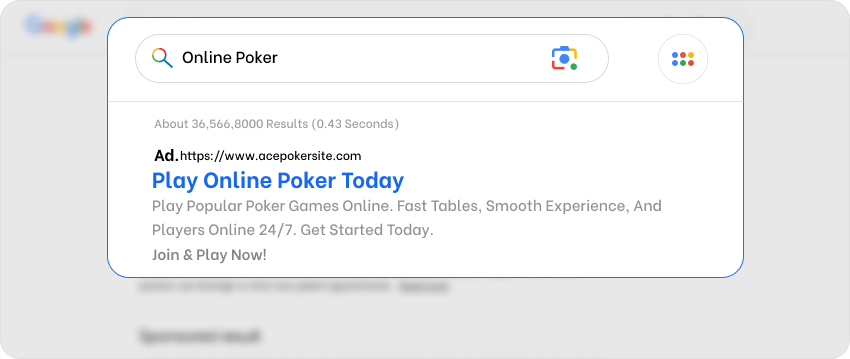
Search engines like Google and Bing are one of the most popular channels for promoting poker games or offers.
With search engine marketing (SEM), you can run search ads that appear when people look for keywords such as “online poker,” “play poker online,” or “best poker sites.” This means you’re reaching users who are already interested in poker and actively searching for it.
However, promoting poker on search engines comes with rules. You must follow iGaming advertising guidelines, and these rules can change based on the country or region you’re targeting. As long as your ads, landing pages, and licenses meet the platform’s policies, search engines can be a powerful way to drive high-intent poker traffic.
2) Ad Networks

Poker-friendly ad networks are another strong channel used in poker promotion.
These are advertising platforms that allow poker and iGaming promotions across thousands of relevant websites/blogs, apps, and mobile placements. Unlike search ads, these usually include banner ads, native ads, popunder ads, etc.
Many of these ad networks operate on a self-serve basis and specialize in casino or poker traffic, which makes it easier to launch PPC for poker campaigns with fewer compliance issues and faster approval times.
You can quickly drive targeted poker traffic to your landing pages, where users can sign up, deposit, or start playing. If done right, ad networks can deliver good volume and consistent conversions.
3) Affiliate Marketing
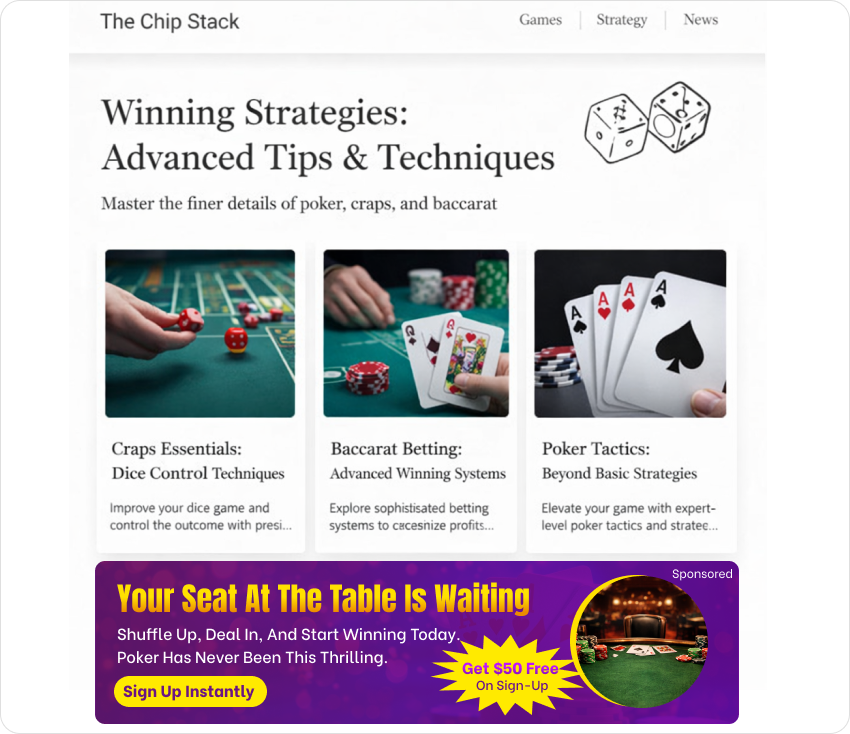
Affiliate marketing is one of the most widely used channels in the poker industry.
Here, poker brands work with affiliates—bloggers, content creators, YouTubers, streamers, or website owners—who promote poker offers to their audience through online ads and other digital marketing channels. Affiliates earn a commission for each poker player acquisition and each deposit made through their affiliate link or code.
This channel works well because affiliates already have trust and influence with their audience. Whether it’s through reviews, tutorials, comparison sites, or social content, affiliate marketing can drive high-quality poker players over the long term.
4) Direct Publisher Buys

Direct publisher buying is a more hands-on approach to poker advertising.
In this method, poker advertisers manually search for poker-related, sports-related, or relevant websites and blogs with good traffic. Then, they directly contact the site owners and negotiate ad placements—such as banners, homepage takeovers, or sponsored content.
This process takes time and effort, but it gives you more control over where your online poker ads appear. If you find the right high-traffic websites, direct buys can be very effective and are definitely among the important channels used to advertise poker sites or apps.
Recommended Ad Formats for Poker Advertising
Poker-focused advertising works best when it balances performance-driven formats, community trust, and strict compliance with iGaming regulations. Here are recommended ad formats for poker advertising, based on what tends to work best for poker player acquisition, retention, and brand trust.
1) Popunder Ads

Popunder ads are one of the most popular choices in the poker industry, not because of hype, but because they consistently deliver strong results for advertisers.
These ads quietly open behind the main browser window and wait until the user is done browsing.
Poker advertisers use popunders when they want to push large numbers of players to signup pages, bonus offers, or poker room launches. The strength of this format isn’t subtlety—it’s reach. One well-optimized popunder campaign can send thousands of potential players in a very short time.
2) In-Page Push Ads

In-page push ads look similar to push notifications, but they don’t require user permission. That’s a big win in the poker industry. These ads appear directly on the website/blog, usually in the corner or as a floating message.
Poker advertisers use this format to nudge users rather than interrupt them. It works well for promoting limited-time poker bonuses, freerolls, or reminders to “play now.” Since there’s no opt-in involved, advertisers can reach users instantly across devices.
3) Banner Ads

Banner ads may be among the oldest formats, but they’re still widely used to advertise poker offers. You’ll often see them on poker blogs, casino review sites, or sports-related pages. These are the classic visual ads placed at the top, side, or within website content. These ads aren’t about instant conversions; instead, they play a big role in brand awareness.
Poker advertisers use banner ads to:
- Build trust and recognition
- Stay visible over time
Complement other performance-driven ad formats
4) Interstitial Ads

Interstitial ads appear as full-screen ads, usually during natural breaks—like when a user moves from one page to another. Because they take up the entire screen, they’re hard to ignore.
In poker campaigns, interstitial ads are often used for high-value promotions, such as limited-time bonuses or major tournaments. When timed properly, they can deliver strong results without frustrating users.
How to Build a High-Performing PPC Strategy for Poker Advertising
Building a high-performing PPC (Pay-Per-Click) strategy for advertising poker is very challenging due to strict ad policies, high competition, and an intent-driven audience. However, when a PPC strategy is executed well, you can not only overcome these challenges but also achieve significant success.
Here’s a battle-tested framework to navigate compliance, outbid competitors strategically, and convert high-intent poker players profitably.
1) First, Understand Poker Advertising Regulations
Before you spend a single second on creating a PPC campaign for poker, you need to know the rules.
Poker advertising is heavily regulated, and those rules vary by country, state, and even ad platform. Some regions allow real-money poker ads, others restrict them, and some ban them completely.
Here’s what you should always check:
- Whether poker advertising is legal in your target GEOs,
- Platform-specific policies,
- Proper licenses or certifications,
- Required disclaimers, age restrictions, and responsible gaming messages.
Ignoring compliance can result in your Poker ads being disapproved or your ad account being permanently banned.
2) Choose the Right PPC Channels
Not all PPC platforms work equally well for the poker industry.
Some platforms are stricter, while others are more iGaming-friendly. The key is to focus on channels where your audience already exists and where poker ads are allowed.
Common PPC channels for poker advertising include:
- Search engines for high-intent traffic
- Social media platforms (where permitted) with strict targeting
- Specialized Poker ppc ad networks, such as 7SearchPPC.
At an early stage, it’s important to avoid testing all PPC channels at once. Instead of spreading your budget everywhere, research and start with one or two PPC channels, and scale once you see results.
3) Target High-Intent Keywords
High-intent keywords are the foundation of a successful PPC for poker campaign. These are the keywords used by people who are already interested in playing poker.
Instead of targeting broad terms like “poker,” focus on more specific phrases such as “online poker real money,” “best poker app,” or “play Texas Hold’em online.”
These keywords may cost more per click, but they bring in users who are much more likely to sign up and play. That means better quality traffic and higher conversion rates.
Power of Keywords: An In-Depth Analysis of PPC Keyword Research
4) Segment Campaigns by Player Type
One big mistake advertisers make is treating all poker players the same.
A beginner, a casual player, and a high-stakes player do not respond to the same ad. Treating them the same kills performance.
Create separate campaigns for different player types. Then experiment with ad formats inside those campaigns. Try popunder ads in one, in-page push ads in another, banners in a third. Don’t assume one format will work for everyone.
Testing different formats across campaigns helps you understand what actually connects with each audience—and that insight is worth more than any “best practice.”
5) Plan Your Budget Strategically
Your budget shouldn’t be static. It should move based on data.
This is where postback tracking becomes non-negotiable. Tools like Voluum or RedTrack show you the crucial data of your poker ad campaigns.
Once you see the full picture, shift budget toward whitelist traffic sources, high-performing poker ads, and geos that actually bring value—not just traffic. At the same time, reserve part of your budget for testing new GEOs and offers.
6) Use Smart Targeting and Ad Scheduling
Better targeting often beats higher bids. Segment your audience by location, device, and operating system. Some regions perform better than others. Mobile users may convert at different rates than desktop users, and even Android and iOS players show distinct engagement and conversion patterns.
On top of that, pay attention to when your ads run. Poker activity often spikes at specific hours. Running ads 24/7 without data is usually wasted spend. Smart scheduling helps you focus on the times that actually convert.
7) Optimize Landing Pages to Speed Up Conversions
Your landing page should do one thing—convert.
Your ads can be perfect, but if the landing page feels confusing or slow, users will leave. Keep things simple. One clear message, one clear action, and no unnecessary distractions.
Match the landing page with the promise in your ad. If the ad talks about bonuses or easy sign-up, the landing page should show that immediately. Small attention here can make a big difference without increasing your ad budget.
What It Takes to Create Poker Ads That Convert
Perfect poker ads speak to the player’s mindset. To do that, you need to understand why someone plays poker, why they choose your game or offer over competitors, what makes them hesitate, and when they’re ready to act. When you get these pieces right, you move closer to mastering poker advertising—and driving real conversions.
Let’s break down what actually makes poker ads work.
1. Eye-Catching Creatives That Feel Native to Poker

In poker advertising, visuals do most of the heavy lifting. If your creative doesn’t stop the scroll, nothing else matters.
High-converting poker creatives usually stick to familiar, trust-building visuals:
- Poker tables, chips, cards, and real in-game moments
- Clean UI screenshots that show how the platform looks
- Real players or dealer-style imagery instead of stock photos
Matching the brand’s theme color is equally important. Consistent colors make the brand recognizable and trustworthy, especially for repeat exposure. Loud colors may grab attention once, but cohesive branding builds long-term recall.
2. Short, Sharp Copy That Grabs Attention Instantly

Poker ads don’t need long explanations. They need sharp, punchy lines that trigger curiosity and action.
Strong poker ad copy usually:
- Speaks directly to the player (“Ready to turn skill into winnings?”)
- Focuses on the experience, not just the platform
- Keeps sentences short and confident
The goal is to make players feel like the game is already waiting for them. Avoid generic phrases and instead lean into excitement, competition, and opportunity.
3. Clear Value Propositions That Matter to Players

Poker players are value-driven. If the benefit isn’t obvious, they won’t click.
Your ad should clearly highlight:
- Welcome bonuses
- Deposit matches
- Free tournament entries
- Loyalty rewards or rakeback
Instead of listing everything, focus on one strong hook per ad. For example, a bonus-focused ad works better than mixing bonuses, tournaments, and cashback all at once.
When the value is clear, players don’t hesitate—they click.
4. Genuine Urgency That Motivates Action

Urgency works in poker ads when it feels natural rather than fake.
Effective urgency cues include:
- Limited-time bonuses
- Upcoming tournaments with deadlines
- “Seats filling fast” messaging
Poker is competitive by nature, so urgency fits naturally into the mindset of players. The key is honesty—false urgency damages trust and long-term performance.
5. Credibility Signals That Build Confidence and Trust

Poker involves real money, so trust is everything. Players need to feel safe before they click.
High-converting poker ads often highlight:
- Secure payment methods
- Licensing or regulatory compliance
- Player numbers or active community size
- Fair play or RNG certifications
These credibility-generating factors instill confidence in the poker audience, allowing them to click without hesitation.
6. Action-Driven CTA That Removes Friction

The best poker CTAs are simple, confident, and friction-free. Poker advertisers often use phrases like:
- “Play Now,”
- “Join Tonight’s Tournament,”
- “Claim Your Seat.”
These CTAs work well because they clearly guide players on what to do next and make the action feel effortless.
How to Measure Success in Poker Advertising
To know if your poker advertising efforts are really paying off, you need to track more than just clicks. These key metrics help you see the real picture.
CPA (Cost per Acquisition)
CPA tells you how much you’re spending to acquire one new player. For example, if you spend $500 on poker ads and get 10 new players, your CPA is $50. A lower CPA usually means your ads and targeting are working efficiently.
Deposit Rate
This metric shows how many registered players actually make a deposit. For example, if 100 people sign up and 30 of them deposit, your deposit rate is 30%. This metric helps you understand the quality of traffic your ads are bringing in—not just the quantity.
Retention Rate
Retention rate measures how many players come back and keep playing over time. If players deposit once and never return, something is missing. Strong retention often means that your game experience, bonuses, and overall trust are on point—and that your retargeting advertising strategy is on the right path.
Player Lifetime Value (LTV)
LTV is the total revenue you earn from a player during their entire time on your platform.
Some players may deposit small amounts but play regularly, making them very valuable in the long run. LTV helps you decide how much you can afford to spend on acquiring players.
ROAS (Return on Ad Spend)
ROAS shows how much revenue you earn for every dollar spent on ads. For example, if you spend $1,000 on ads and earn $3,000 from those players, your ROAS is 3x. This metric gives a clear picture of whether your poker advertising is profitable or not.
Conclusion
Poker advertising works best when you stop chasing traffic and start thinking about players. The brands that win are the ones that understand who they’re targeting, where those players come from, and what actually convinces them to play.
When you combine the right channels, honest messaging, strong creatives, and close tracking of performance, growth becomes sustainable. Poker is still expanding, and there’s plenty of room to win—if you play the long game and make every ad decision count.
Frequently Asked Questions (FAQs)
1. What is poker advertising?
Ans. Poker advertising is the promotion of poker games, apps, or poker rooms to attract new players and keep existing players active. It includes ads, content, and campaigns designed to drive sign-ups, deposits, and gameplay.
2. Why is poker advertising more challenging than other niches?
Ans. Advertising poker games or offers face strict regulations, high competition, and rising ad costs. On top of that, not every click turns into a paying or long-term player, which makes ROI harder to manage.
3. Is advertising casino or poker offers legal everywhere?
Ans. No. Poker or casino advertising laws vary by country and region. Some places allow it with licenses and restrictions, while others ban it completely. Always check local regulations before running ads.
4. Which channels work best for poker advertising?
Ans. The most effective channels include search engines, poker-friendly ad networks, affiliate marketing, and direct publisher buys. The right channel depends on your budget, goals, and target audience.
5. Which ad formats perform best for poker campaigns?
Ans. Popunder ads, in-page push ads, banners, and interstitial ads tend to perform well. Each format serves a different purpose, from awareness to direct conversions.
6. How to advertise poker games or offers?
Ans. You can advertise poker by using compliant PPC channels, targeting high-intent keywords, strong creatives, and conversion-optimized landing pages.
7. Which ad network is ideal for advertising poker-related platforms?
Ans. The ideal ad network depends on your goals, audience, and budget. However, many poker platforms prefer 7SearchPPC for its flexibility, high-intent traffic, and scalable options.